Bookride

RARE BOOK GUIDE, EVERY ONE A WINNER

07 November 2009

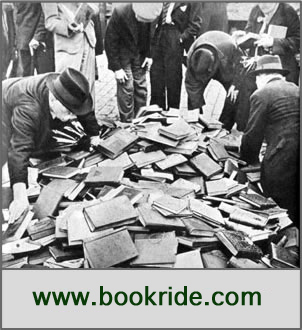
William Carlos Williams, Poems (1910) & other burnt books


William Carlos Williams. Poems. Privately printed, Rutherford, New Jersey, 1910.
Current selling price $25,000 (£15,000)

(and other books and manuscripts accidently burnt)


Of William Carlos Williams’ debut slim volume, Poems, which the young and popular physician of Paterson, NJ published privately in 1909 only two copies are known to exist. Of the second state, which differs from the first in only a few respects, a hundred copies were published in 1910 by a local printer Howell at 25 cents a copy. Dr Williams took a dozen of these to the local stationery store and after a month four had been sold, so he brought home the remainder and after distributing a few copies to members of his family, returned the rest of the edition to his printer. At some point Howell, as Williams recalled in his Autobiography, then wrapped them in a neat bundle and put them away for ‘safe keeping’. After they had ‘ reposed ten years or more on a rafter under the eaves of his old chicken coop ‘ they were ‘, Williams recorded ruefully, ‘inadvertently burnt ‘.

Apparently only 9 copies survived from the inferno, by which time ( it would have been sometime after 1920 )Williams had published with greater success and presumably received back what was left of the edition. Or did the egregious and highly embarrassed Howell retain them? What I want to know is why, for all that Williams regarded the contents of Poems as ‘ bad Keats…bad Whitman too ‘ and felt that there was ‘ not one thing of the slightest value in the whole thin booklet ‘, could he not have given the ninety-odd pamphlets house ( or surgery ) room ? Today, each copy of this first book by one of the most important innovators in American poetry commands around $25,000, with or without scorch marks !!

Tales of books or ( more rarely )manuscripts publicly burned are common enough in the literature of despotism or Puritanism. Whole libraries have gone up in flames ( for more details see the excellent Books on Fire by Lucien X Polastron ), and who knows how many Caxtons and Wynken de Wordes were lost in the Great Fire of London. Didn’t Pepys lose some ? And whole editions were turned to ash in printer’s warehouses during the bombing of the capital in both World Wars—we know, for instance, that the entire print run of Awake, that excellent first collection by W. R. Rodgers was destroyed, as well as most of the first edition of Country and Town in Ireland by Constantia Maxwell ( both of which were reprinted later )---and possibly (since I can’t find a copy recorded anywhere after fifteen years of searching ) of EBO by E. B. Osborn, famous literary editor of the Morning Post—which wasn’t reprinted. But losses through accident or carelessness ? J. S. Mill’s errant housemaid may perhaps be the best-known literary pyromaniac, but the fate of poor old Frank Kermode’s signed firsts, which were lost to the refuse tip in Cambridge ( presumably to be incinerated )has a element of black humour to it. Were the city’s book dealers seen scavenging late into the night for literary treasures among jettisoned fast food cartons and broken-down computers ? —and more recently still, cult children’s writer G. P. Taylor, who in 2005 lost an estimated £250,000 when he threw the MSS of his million-selling Shadowmancer on the garden bonfire along with other manuscripts. Regarding this I want to know at what point did it become impossible for the absent minded ex-vicar to recover at least a portion of the typescript from the flames? In my experience A4 sheets thrown onto bonfires tend mainly to blow away, though I suppose it could have been unusually still that day.

On this note, is the tragic story of the Dimsdale copy of Blake’s Songs of Innocence, which the first owner is said to have bought from the author himself. Apparently, while preparing for a move from Essendon Place in Hertfordshire ( later the home of Barbara Cartland ) in the 1890’s, leaves from the volume were dumped onto a bonfire by the gardener, who only realised his mistake after 27 plates had been totally consumed by the flames. Nine leaves were rescued and these, complete with singed edges, remained in the Dimsdale family until they were sold at Sotheby’s in 1952, when Blake scholar Geoffrey Keynes bought them, as he recalls in his autobiography, The Gates of Memory (1982). [R.M.Healey]

Thanks Robin. Wise words, indeed. One wonders if the Rev. G.P. Taylor isn't drastically overvaluing himself? Reminds me of when uberdealer R.A. Gekoski went to negotiate with Golding about buying the manuscript of 'Lord of the Flies'. The great man wanted a million pounds for it (in the 1980s). No deal! Not even the MS of Kafka'a 'The Trial' had made that at the time.

A few books to add--many copies of the USA 1851 first of 'Moby Dick' are said to have gone up in a warehouse fire. 'Gadsby', the novel without a 'e' in it much loved by Oulipians is now very hard to find because of another burning warehouse, likewise Nabokov's 'Despair' (1937) and E.M. Forster's 'Alexandria' (1922.) Other books have succumbed to what the British Library call 'enemy action' (one imagines fire was involved.) This is said to account for the scarcity of 1938 firsts of Beckett's 'Murphy' - a bombed warehouse at Routledge. As for William Carlos Williams let's not forget his great imagist poem 'Red Wheelbarrow.' He may have started off doing bad Whitman, but could Walt have written anything better?


so much depends
upon

a red wheel
barrow

glazed with rain
water

beside the white
chickens.

05 November 2009

Downsides of the Ebook...


I have been ruminating about ebooks and Amazon's Kindle recently. I am not a Luddite and believe they have their place but I am not of the "this changes everything" school. About 18 months ago one of the Motley Fool crew wrote a piece about 'Why Kindle Will Change the World' - this was a sort of U turn after initially calling it a $399 paperweight. On examination the main reason he thought it was so fab is that he managed to publish a novel in Kindle form with a few key strokes. It was a 'cheesy' coming of age novel ( The Last Perfect Fathers Day) that he had written as an intense young student and had lying around on his hard drive in MS Word. 'In seconds, Amazon chewed it up and spat it back out in Kindle's HTML…' He priced it at $2.59 and it already has a couple of reviews and is 25000th in the Kindle charts. There is something marvellous about this and before long a work of real genius may appear just in this manner.

There is no reason why computers, printed literature and Ebooks cannot co-exist --Dell, Book and Kindle as it were. But there are some disadvantages to these devices (Kindle, Nook and the Sony Reader etc.,) which I am happy to enumerate.

1. A printed book is a delight to handle, it doesn't need a battery and it has worked well for 555 years. Call it low technology.

2. If you are on the move a paperback is easier to carry around.

3. You can't wedge a ebook under a wonky bed or table.

4. You can't throw it across the room in disgust (actually you can but it's an expensive gesture.)

5. You can't press leaves and flowers between the pages.

6. You can't lend it to a friend (Nook reckon they have sorted this out but it's just not the same.)

7. You can't get it signed by the author.

8. J.K. Rowling won't allow any of her books to appear in this format (however Dan Brown is only too keen.)

9. They don't smell of anything.

10. You can't proudly shelve it and you can't show off or boast about your book collection.

11. You can't watch the books go up in value. You can't sell the books.

12. You can't donate it to a library.

13. You can't marvel at the beauty of its hand coloured illustrations, chromolithographs, pochoirs etc.,

14. You can't have it finely bound in leather with silk endpapers and fine filigree work.

15. You can't slip press cuttings in it or hide bank-notes in it.

16. Thieves can steal it right out of your hands (this cannot happen with a real book, thieves are just not interested.)

17. They are not biodegradable and as time goes by the current models will look as dated as a Psion organiser (hence expensive updates...)

18. A book can be looked at for a few minutes with the reader flipping backwards and forwards (browsing) effortlessly. You
can then convince most people that you have read the book. Much harder with an Ebook.

19. You can spill coffee or wine on a book and it's still legible, with an Ebook you are suddenly down $399.

20. Lastly (for the moment) if you had an EBible you couldn't swear on it with any conviction, let alone bash it or thump it.


More thoughts on this to follow -reading books on an Iphone, the concept of the Cloud Library, why indexes don't work on hand-held devices and some consideration of their advantages...

02 November 2009

At an Alcoholics Anonymous auction...Part 2


Result were fairly good at the dispersal of this serious Alcoholics Anonymous collection, although mostly under the low estimates with about 30% bought in. The sale took place at Pacific Book Auctions in San Francisco on 22 October. Most early printings of the A. A. Big Book were in bright facsimile jackets and one that was in a decent original jacket- a fourth printing from 1943 made $3600. There were about a dozen books inscribed by Bill W, often quite late in the century but only two by his co-creator Dr. Bob (Robert Smith.) One book from Dr. Bob's library with his ownership signature made a healthy $2280. It was a copy of David Seabury's 1937 work 'The Art of Selfishness'. This is a sort of early self help book by a psychologist ( founded the Centralist School of Psychology.) He also wrote 'What Makes Us Seem So Queer '(1934) and 'How to Worry Successfully' (1936). Ordinarily the book would make $20 but Dr.Bob's signature is rare. The book also had his calling card tipped in showing him to be a surgeon. When selling it the auctioneer said -'...here's one to boast about at the next meeting..' something you would be unlikely to hear at a British auction.

It is hard to overstate the importance of the 'Big Book' - a landmark work not merely in saving the minds, souls and bodies of millions of out of control drinkers but also in being the first broad manifestation of group movements, 'steps', 'sharing' 'self help' and what later became known as 'recovery.' Early editions, whilst not rare, are much sought after. A genuine first inscribed by Bill W to a character called 'The Brewmeister' (Clarence 'Cracker' Snyder) made $10,800 in very mediocre condition. The story of the 'Home Brewmeister' is dealt with in the book and Snyder was a founding member known to have disagreed with Bill W on the subject of anonymity.

The big result came with a sixth printing (1944). It was a less than brilliant copy in a worn d/w but inscribed in 1948 by the three founders of AA--Bill W, Dr.Bob and Bill Dotson and later by Bill W's sponsor Ebby Thacher and a few others. It made $27000 against an estimate of $30,000 to $50,000. It was news to me that Bill had a sponsor (like being 'The President's Analyst'…) Thacher had attended the Oxford Group meetings, seen as a precursor to AA - another much collected movement some of whose books were in the sale.

Three real firsts of the 'Big Book', all somewhat used but acceptable examples in facsimile jackets, made between $6600 and $7800. A big lot (169 books) on 'alcoholism, substance abuse and recovery' was bought in against an estimate of $3000 to $5000. It was the kind of lot that would have sold in the boom years. Likewise a lot of 60 of the 72 printings of the third edition (pic above) all in jackets (1976-1998) failed to garner a bid of $750. A patient and diligent Ebay seller could probably have trebled his or her money on this lot but as a wise old bookseller once advised me - 'never buy hard work.'

30 October 2009

At an Alcoholics Anonymous auction...


I am currently in the USA on a break and buying a few books. Last week I went to an auction at the excellent Pacific Book Auctions in San Francisco. I seldom go to auctions anymore but I expected to run into a few old faces. Curiously, although I viewed the books for an hour or more on the morning of the sale, I was the only person there. When the auction started 2 more people showed up, one keenish buyer of standard high spot modern firsts, the other a pleasant but cautious book dealer I had seen at fairs -he bought nothing. The sale was in 3 parts- general books of which about a third were bought in (either no interest or too ambitious reserves) the second a bunch of Easton Press Books which sold modestly but with no passed over lots--some to a fourth person attending just for these slightly meretricious (to a British eye) items.

Two other people showed up but appeared to do little or no bidding. Andrew from Adobe books came by and was saluted by the auctioneer and myself-he bought nothing and left after 5 minutes. I am growing to like these Easton books in their gilt decorated reconstituted leather bindings (many can still be bought on line from Easton themselves-- a general pic of their 'classics' below.) The signed books are quite desirable especially as they produced books signed by the likes of George Carlin, B.B. King, Andrea Bocelli, George Jones, Stanley Kramer, Elie Wiesel, John Kerry, V.S. Naipaul etc., Some are surprisingly valuable give that most are limited to at least a 1000 signed copies. They love them on Ebay and they sell quite well in England where they are less commonly seen.


The last section was a serious Alcoholics Anonymous collection apparently shipped over from Europe in its entirety. For this the room emptied and a well dressed couple appeared who I took to be high rolling A. A. punters. They bought nothing. I also bought nothing--no one else was there, there were more staff than attendees. All business was from phone bidders, live bidders over the net (bids announced with a digitalised bell) and bids left with the auctioneers. All buyers were anonymous. The old days of crowded auctions and joshing camaraderie are dead. I bought three books in the earlier part of the sale but with 20% commission and 9.5% local tax I shall be hard pushed to make a profit worth shouting about.

The A.A. books went pretty well considering the economic climate [a sober account to follow...but one Big Book, a 6th printing from 1944, signed by the 3 founders made a stonking $27000]

27 October 2009

Laughing Torso / A Bohemian Word Cloud


I was going to do something on Nina Hamnett's 'Laughing Torso' which has a splendid cover which cannot be found on the web and I left my copy at home. Will scan in on return. Nina Hamnett (1890 – 1956) was a Welsh artist, writer and artist's model (that's her by Modigliani.) She became known as the Queen of Bohemia and wrote this memoir in 1932. Aleister Crowley unsuccessfully sued her and the publisher for libel over allegations of Black Magic made in the book and it became a best seller. The Great Beast's magickal activities are also dealt with in Betty May's more valuable Tiger Woman another great bohemian memoir (1929). Nice jacketed copies of 'Torso' can fetch £100 and the limited edition £150+. The 'torso' refers to a sculpture of her by Gaudier Brzeska. She was close to Modigliani and this reminiscence of him gives a flavour of the work, Nina is sitting alone in a Parisian cafe:
"Suddenly the door opened and in came a man with a roll of newspaper under his arm. He wore a black hat and corduroy suit. He had curly black hair and brown eyes and was very good looking. He came straight up to me and said, pointing to his chest, ‘Je suis Modigliani, Juif, Jew,’ unrolled his newspaper, and produced some drawings. He said, ‘Cinq francs.' They were very curious and interesting, long heads and pupil-less eyes. I thought them very beautiful. ...I gave him five francs and chose one of a head in pencil. He sat down and we tried to understand each other and I said that I knew Epstein and we got on very well, although I could not understand much of what he said. He used to drink a great deal of wine and absinthe when he could afford it. Picasso and the really good artists thought him very talented and bought his works but the majority of people in the Quarter thought of him only as a perfect nuisance and told me that I was wasting my money..."
The last sentence shows how wrong some people can be - those drawings are now worth 100,000 times the price that Nina paid... The book, as Robert Scholes says in his splendid 'Paradoxy of Modernism', offers us 'glimpses of the bohemian core of Modernism and ...perspectives on the roles open to women in that dark center of Modernist art.' He also looks at the lives of the spirited Kiki (of Montparnasse) and the elusive Beatrice Hastings who wrote under at least 16 pseudonyms.

In my research in GoogleBooks (these dudes are bringing in a renaissance of scholarship and learning) I came across a sort of snapshot summary of the text of 'Laughing Torso' which they call 'Common terms and phrases' but is otherwise known as a 'word cloud.' Edited down a little it gives an impressionistic summary of all things boho-- espadrilles are there and only the berets are missing:-
Absinthe accordion Aleister Crowley Arthur Rimbaud Augustus John Bal Musettes beautiful black hat bottles Brancusi cafe Calvados Camden Town champagne Chelsea Cocteau Countess Cubist danced delighted Diaghilev Dieppe dined dinner Dirty Dick's drank drawings dressed drink Eiffel Tower Erik Satie espadrilles Fitzroy Square Fitzroy Street Foujita francs Gare Montparnasse Gertrude Stein girl Golf Juan guitar Henri Rousseau Horace Cole Iris Tree James Joyce Jean Cocteau Latin Quarter Les Halles Les Six lunch Luxembourg Gardens Modigliani Montmartre Montparnasse myself Nancy Cunard Newhaven night Omega Workshops Osbert Sitwell Oscar Wilde painted painter Paris Paul Verlaine Prefecture of Police restaurant Roger Fry Rotonde Sickert Stravinsky studio Vermouth wife wine woman wonderful Wyndham Lewis young

24 October 2009

The Books of Brin


In an earlier posting Google Books -A Library to Last Forever I suggested that Google so-founder Sergey Brin had accumulated well over 15,000 real books by the time he was 26. He still has a site up from his Stanford days with them all listed - My Favorite Books - a strange but just about credible collection with a heavy emphasis on SF and fantasy fiction although almost all the world's classics are there from Aeschylus to Xenophon. There's Crowley and Huxley, Le Fanu and Lovecraft, Deepak Chopra, most of the Booker authors and an unusual amount of female writers (some romantic or sword and sorcery) for a mere male to possess. I had a vague suspicion that these were not books read by him or even owned by him. How could the poisonous 'Protocols of the Elders of Zion' be a favourite book, let alone co-exist with Chris Rock's 'The Bitch Factor' ? Through some data mining aided by Google I ascertained that indeed these were not Sergey's books, but part of an early web search project done while he was at Stanford. Below is the garage in nearby Menlo Park where Google was born and where I had imagined he kept these books.

Sergey Brin did not possess 15000 books. In 1996/ 1997 he and 3 other Stanford guys were working on something called 'Dual Iterative Pattern Relation Expansion (DIPRE)'. As they put it
We begin with a small seed set of (author, title) pairs (in tests we used a set of just five pairs). Then we find all occurrences of those books on the Web (an occurrence of a book is the appearance of the title and author in close proximity on the same Web page). From these occurrences we recognize patterns for the citations of books. Then we search the Web for these patterns and find new books. We can then take these books, find all their occurrences, and from those generate more patterns. We can use these new patterns to find more books, and so forth. Eventually, we will obtain a large list of books and patterns for finding them.
They chose 5 books - Isaac Asimov's Robots of Dawn, David Brin's Startide Rising, James Gleick's Chaos: A New Science, Shakespeare's 'Comedy of Errors' and Dickens's 'Great Expectations'. Each book seems significant in hindsight--and it is likely these data miners in the dawn had great expectations. Anyway it was only the two science fiction books which produced usable patterns (3) and after searching 5 million web pages for these two they found 105 patterns…eventually adding the word 'books' they produced 15,527 titles "with very little bogus data." These are the books listed on the web as 'Sergey Brin's favourite books.' Books were useful for establishing the search code as the author and the title are often close together. To a civilian this stuff is mostly impenetrable but it seems what they were doing was laying the foundations for the code used by Google, truly a licence to print money (so much that he is now contemplating launching a space ship...)


Reading this list without knowing the above it had seemed a strange and wondrous bunch of books. He even had a title that someone asked for this morning - D.E. Harding's mystical classic 'On Having No Head.' It is not impossible for a young person to accumulate 15000 books--if he or she buys 30 books a week from age 15 to 25 and has somewhere to put them they can achieve it with ease. Regular attendance at library sales will help. I have seen such collections, the novelist Hanif Kureishi who used to live near our shop in the early 1980s had about 10,000 paperbacks and he was not yet thirty. I knew a teenage dealer with 20000 books in a storage unit in the unpromising London suburb of Neasden. So it was entirely credible Brin, a highly educated student, could have this quantity of books.

I first became suspicious when I came across books on the list by the obscure 90s writer Dollie Radford. I knew her books because recently we bought some of her son's library from a relation-- he had been a minor poet and a fringe Bloomsbury player (that's him below picnicking with handsome Rupert Brooke and RB's inamorata Noel Olivier and Virginia Woolf in a fetching headscarf.) What was Sergey doing reading Dollie? When I googled the pair of them all was explained. He actually mentions Dollie in one of his papers 'Extracting Patterns and Relations from the World Wide Web' -noting that 'one of the most surprising results was finding books which were not listed in major online sources such as 'The Young Gardener's Kalendar by Dollie Radford [Rad04]…'

23 October 2009

Collecting John Piper


Frances Spalding’s long awaited twin biography of John and Myfanwy Piper is being reprinted less than a month after its appearance. This is something almost unheard of in the small world of art history books. So either there is currently a Piper resurgence, or the OUP has badly underestimated the demand, or both. Or perhaps people want to discover more about the hitherto neglected Myfanwy, who among things, was Betjeman’s muse. But there is no doubt that John Piper has some incredibly dedicated fans. The Net is full of them. One of the most devoted is Ken Hayes, whose John Piper site is admirably comprehensive.

People who can’t afford paintings by Piper tend to collect the books written, designed or illustrated by him. I’ve already dealt with the Shell Guides series in an earlier blog, but there are so many other Piper items worth collecting. Some are very obscure and very expensive indeed. Take his first book, published when he was just 18-- The Wind in the Trees. I’ve never seen a copy of this book of verse which Piper’s dad got the Horseshoe Publishing Company of Bristol to bring out in 1921. Even Hayes admits to not having found a copy. Presumably they exist somewhere, or is this another et tu Healy situation ?

Piper’s second slim volume, The Gaudy Saint, which appeared 3 years later from the same publisher, is only slightly less scarce. Blackwell’s have a copy at a hefty $942. Then in 1925 Piper senior paid the Curwen Press to publish his memoirs. Sixty-three Not Out would be unremarkable without the 19 tiny vignettes by the twenty-two year old artist, by then planning to leave his post as a clerk in his father’s law firm for art school. About 20 years ago I actually found a copy marked at £10 in the basement of a shop in Cecil Court ( I forget which one ), but rejected it as a bit peripheral. What an idiot I was! I’ve never seen another copy since, but Maggs now have one priced at $707. Drat it !

Brighton Aquatints (1939), Piper’s first important book, is not seriously scarce but is always sought after. There is a tale that Betjeman coloured in some of the aquatints, but I’ve never actually seen a coloured version. Incidentally, Piper also contributed an aquatint as a frontispiece to S John Woods excellent John Piper: Paintings, Drawings and Theatre Designs (1955) and this too I have seen coloured in, though it looks better uncoloured. Myfanwy once gave me one of these prints from a pile hanging around at Henley Bottom Farmhouse after Piper’s death. A few years earlier she had very kindly presented me with a whole run in mint condition of the incredibly scarce Axis, the avant garde art magazine she had edited in the thirties. For this I will be eternally grateful. I would never have been able to afford such a treasure otherwise.


Another great scarcity is Colour in the English Country House, which appears in the bibliographies, but which few, including myself, have seen. It’s possibly the sort of booklet that might have been discarded with annual spring-cleanings and could be worth having if it turned up in a box of books somewhere. Most other Pipers are nothing like as rare. Books with wrapper designs by him shout out Piper and are common enough, as are books containing his illustrated. Piper’s own title in the Britain in Pictures series, British Romantic Artists, comes up all the time. On ABE at present there are 62 copies, all hovering around £6- £20, but for some reason one chancer in Santa Barbara ( about as far away from Piper country as you can be ) has stuck a price of $250 on a copy. The thing doesn’t seem to have an original Piper abstract or postcards from Betjeman loosely inserted. It’s just a perfectly ordinary copy of a common book in a standard wrapper printed with printer’s ink, rather than painted by Piper himself in an idle moment. But on this particular subject, Piper did on one occasion reproduce in ink the cover of his Buildings and Prospects for a friend who had lost the wrapper of his own copy. Now that would be a book to covet. [R.M. Healey]

Thanks Robin. I sympathise with your annoyance at having let go 63 Not Out ('a bit peripheral'). I have done this with other books and regretted it and gone back only to find "the swifter glove of another hunter" has nabbed the book (Javier Marias.) Hells, bells and buckets of blood! A trivial point about Piper is that sartorially he was similar to Anthony Powell - they both wore non v-neck pull overs over shirt and tie with the tie plumping out the at top of the pullover like a second Adam's apple - to me it tends to signify the chap will not put up with any nonsense. James Lees Milne also affected this style (are there others?) I guess it's an upper class thing and you seldom see it anymore. I am not sure if Piper is a long term investment and whether succeeding generations will discover his art. Given the enthusiasm with which his bio has been received he is probably sound. Because he has never been trendy it is unlikely that he will go out of style...

Below is a splendid Piper painting - Gordale Scar, Yorkshire, 1943.


20 October 2009

Diary of a Nobody (1892)


George Grossmith and Weedon Grossmith. THE DIARY OF A NOBODY. J.W. Arrowsmith, Bristol, and Simpkin, Marshall, Hamilton, Kent and Co. Limited, London. 1892.

Current Selling Prices
$300-$600 /£200-£400


COMIC NOVEL
An English comic novel written by George Grossmith and his brother Weedon Grossmith with illustrations by Weedon, it first appeared in the magazine Punch in 1888 – 89, and came out in book form in 1892. The diary is that of Mr. Charles Pooter, a city clerk of lower middle-class status but significant social aspirations, living in Upper Holloway. Other characters include his wife Carrie (Caroline), his raffish and slangy son Lupin, his friends Mr Cummings and Mr Gowing (jokes about coming and going), and Lupin's unsuitable fiancée, Daisy Mutlar. The humour derives from Pooter's unconscious gaffes, his suburban social pretensions and self-importance, also the many snubs he receives from those he considers socially inferior, such as tradesmen. Pathos (and bathos) is mixed in with the humour--e.g. when Pooter attends the Mansion House Ball (the highest point of his social ambitions) he is distressed to find his name omitted from a long list of guests published in the "society" column of the Blackfriars Bi-weekly News. A letter of complaint results in him and his wife being listed as Mr. and Mrs. Potter, which further enrages him, leading to a correction in the paper which then lists him as Mr. Pewter.

The supreme English comic classic, still near the top of ubiquitous 'best ever book' polls. As Lord Rosebery said "I regard any bedroom I occupy as unfurnished without a copy." It ranks with right up there with Jerome's K. Jerome's Three Men In A Boat, Waugh's Scoop, 'England their England' 'At Swim Two Birds' and the novels of Wodehouse. Jon Wilde wrote in 'The Guardian' about the 2007 documentary 'The Real Mr Pooter'- there may be novels that are more widely loved than Diary Of A Nobody, but surely none more deeply loved… A fair few acquaintances of mine unashamedly admit that they cannot seriously consider a friendship with anyone who does not find the novel uproariously funny.' He goes on to mention other Pooterish characters--Adrian Mole, Bridget Jones, Captain Mainwaring, Victor Meldrew, Alan Partridge, David Brent, Peep Show's Mark Corrigan. He neglects to mention Widmerpool, a successful Pooter (if that's possible.) Oddly enough Arthur Lowe who played Captain Mainwaring played Pooter in a radio adaptation (an almost definitive performance.) The big point that JW makes is that if you don't find it funny 'it almost certainly means that you're self-deluded and humourless enough to be considered Pooterish.'

VALUE? Not especially high but more that 'Three Men in a Boat' which was also published by Arrowsmith three years earlier (you want the address as 'Quay Street' not '11 Quay Street'). Very decent copies should not cost more than £300, Adrian Harrington currently has a decent copy with a signed photo of Weedon Grossmith for £475. It might be more if it was George Grossmith (left) - famous in his day for performing his own comic piano sketches and songs and creating a series of memorable characters in the comic operas of Gilbert and Sullivan; it is said he was the most popular British solo performer of the 1890s. Julie Burchill nominating 'Diary' as her favourite book notes that he also found the time to dally with morphine, possibly as a way of dealing with stage-fright.

Browsing this masterpiece the other day it occurred to me that blogs, with a few exceptions, are basically 'diaries of nobodies' and the struggle of man with his insignificance as the Grossmith freres discovered is both a comic and a tragic matter. John Fowles in 'The Aristos' talks of this struggle (with what he calls 'the nemo') as the supreme source of anguish and suggests the ways of challenging the 'nemo' used by modern man--'I build up a unique persona, I defy the mass. I am the bohemian, the dandy, the outsider, the hippy...' Portentously he adds '...Oswald killed President Kennedy in order to kill his real enemy: his nemo.' I guess if he was still around he would say that people who go on reality TV shows are confronting their nemos… Will deal with this strange work 'The Aristos' (Cape 1964) at some point--its value as a first is not insignificant.

18 October 2009

Google Books -'A Library to Last Forever'

Google co-founder Sergey Brin was an 'op-ed' contributor to the New York Times last week. An interesting article -part puff and part manifesto. It was called 'A Library to Last Forever' -the view from Mountain View as it were. He has so far got the text of 10 million books, many over 100 years old and well out of copyright, up on Google Books and wants to get millions more, especially books post 1923 where US copyright takes hold (i.e. books that are no longer in the public domain.) A good well reasoned article rejecting ideas of a monopoly - at one point he writes - ' I wish there were a hundred services with which I could easily look at… a book; it would have saved me a lot of time, and it would have spared Google a tremendous amount of effort.'

The NYT readers comments are interesting--some outraged at this attempt to sequester the worlds wisdom and knowledge, many profoundly grateful (especially writers and researchers) some worried about the future of books and Brin's motives. One alarmist called Google 'Shiva the Destroyer' another 'A Trojan Horse' ("Beware of Google bearing gifts.") One angry chap compared the Google project to 'agribusiness' - an attempt to own the rights to all books ever published. Over half were positive, one guy urged them to 'soldier' on - 'we will cover your back.' A lot of optimists thought the Library of Congress should be doing this--nobody seemed to mention the cost of digitising books or the vastness of Google's investment ( surely a billion dollars or more -page turners, copyright lawyers, endowments, researchers, experts, academics, programmers, equipment etc.,) As Brin says, anybody can do it (and quite a few have, but not it such a monumental way) but due to their AdWords revenues they can pay for it and it will be money well spent for them and hopefully for us.

He talks of his legal tussles with the Authors Guild and the Association of American Publishers over the project. '…while we have had disagreements, we have a common goal — to unlock the wisdom held in the enormous number of out-of-print books, while fairly compensating the rights holders. As a result, we were able to work together to devise a settlement that accomplishes our shared vision. While this settlement is a win-win for authors, publishers and Google, the real winners are the readers who will now have access to a greatly expanded world of books.' Good stuff, but the battle is not nearly over and the motives of large, rich companies are often suspect. In the new age of Obama's America it would be nice to think these guys could be idealists, even visionaries, who have made enough money to allow them to see beyond the mundanities that motivate corporate man (money and power). Time will tell, but the sheer scale of their ambition is formidable.

In arguing the need to preserve texts digitally Brin talks about how libraries have been devastated over time by fire and floods (the library at Alexandria burned three times, in 48 B.C., A.D. 273 and A.D. 640, the L of C lost two-thirds of its collection in a fire in 1851 etc.,) While he was at Stanford in 1998, floods destroyed tens of thousands of books and a similar flood had happened there just 20 years prior. He notes laconically 'you could read about it in 'The Stanford-Lockheed Meyer Library Flood Report', published in 1980, but this book itself is no longer available.' It is on the subject of freedom and easy and open access to books that he fires his best shot:

"More important, even if our cultural heritage stays intact in the world’s foremost libraries, it is effectively lost if no one can access it easily."

Some NYT comments said you could order all the books you need through Inter library loans, but this is can be a cumbersome method and is only available for some books in some countries. Buying out of print books ('orphans' in googlespeak) from book dealers has a great deal to be said for it but money is sometimes tight and many books are too rare to be affordable or even to be available. As a dealer I see the scheme opening up the market rather than harming it. New collectors, readers and book enthusiasts will be created by this bold 'Forever' project - especially among the under thirty crowd, who are now seldom seen in bookshops or at bookfairs; those born after the year of the Jubilee and Punk (1977) i.e. the post-literate generation. Sergey was four at the time but by the time he was 26 he had accumulated well over 15,000 real books...of which more soon.

Below pic of Basra University Central Library: books destroyed by fire - June 2003

15 October 2009

Jane Austen. Emma (1816)

[ Jane Austen.] EMMA. A novel. In Three Volumes. By the author of "Pride and Prejudice" &c. &c. John Murray, London 1816.

Current Selling Prices
$8000-$30000 /£5000-£20000


CLASSIC LITERATURE
I am briefly revisiting' Emma' as there is a new BBC series with the handsome actor Romola Garai. Also a mediocre copy made $8,400 in New York last month possibly indicative of a flatter Janeite market. The auctioneer notes '...in keeping with Murray's stated views on edition sizes, 2000 copies were printed. Emma is also the only one of Jane Austen's novels to bear a dedication (to the Prince Regent)' . The lightest of her works and often cited as her most accomplished, fulfilling, as it does, her own formula for a successful novel - '3 or 4 families in a country village..the very thing to work on.' Many editions are wanted apart from the expensive 3 decker first, including the still valuable one volume Bentley (1833) fancy illustrated editions (Hugh Thomsom, Chris Hammond) Avalon Society, Limited Editions Club, Folio, Easton etc., Possibly the most wanted and easiest assimilated book of the divine Jane. A bibliographic warning note comes from Geoffrey Keynes:
'...The collation of the first volume of Emma is peculiar in that the first sheet consisted only of the title-page and the dedication to the Prince Regent, while the half-title was printed on the last leaf, which would otherwise have been blank. If the binder has omitted to transfer the half-title to the beginning of the volume, it will appear, at first sight, to be imperfect.'
Strictly speaking the half-title should be at the back of the book to be in its correct position.

The novel has such a strong and true storyline that it easily transposed into an acclaimed movie set in a modern US high school in Beverly Hills ('Clueless.' ) Also filmed 3 other times and done on TV about once a decade. There is rumour of a Bollywood version. As noted 2000 copies of the 1816 first were printed -- it is uncommon to find the half titles and final blanks still present as it is more often rebound in leather lacking these.


VALUE? Has twice made £25,000 at auction this century, both times in original boards (usually slightly repaired/ restored.) A 'very fine' copy bound in 'half , calf gilt, extremities worn' made $24000 in 2002. Recently it has made as little as £5000 several times with a few disappointing 'buy-ins' at carriage trade auctions--usually for less than limpid examples. A decent copy lacking half titles made $11,400 early in 2009 in NY. It can be found in handsomely bound state at most high end book fairs and is not especially scarce. The Bentley one volume 1833 edition can make well over £500; people try to make sets of the Bentley editions which complete can go for several thousand pounds. Jane Austen books in reprint often attract buffoon like over pricing. One chancer in Atlantic City has a whole series of basically old and used turn of the century pocket editions, none worth more than $20, at $200 to $400. They don't appear to ever sell so there are pages of them on the net with other dealers following his witless lead -once again belying Blake's maxim that a fool will persist in his folly until he becomes wise. William Blake could never have foreseen the imbecility of the internet bookseller. What possibly happens, and this is true of many manic over pricers, is that very occasionally some deluded punter buys one of their books thus justifying the whole enterprise.


Sets of Austen are the most rebound of all sets in history. The reason is that unless you put an absolute 'mind at the end of its tether' price on them, they will always sell. They make the perfect gift, prize, reward or inducement. Hard to find a decent set of 19th century (albeit late) leather bindings for less than $1000. Modern 6 volume sets from Easton in a sort of spam leather can be had on ebay at between $300 and $500. Below is Gwynneth Paltrow as Emma - 'clever, pretty and self-satisfied...' That's Romola Garai above--actually in 'Daniel Deronda' but what the heck--one wonders if she would play her namesake if they adapted Ms Eliot's 1863 novel 'Romola'.

10 October 2009

Richard Carlile (1790 - 1843)


(Richard Carlile.) THE POLITICAL AND MISCELLANEOUS WORKS OF THOMAS PAINE. Carlile, London 1819.

Current Selling Prices
$500-$700 /£350-£500


POLITICS / POLITICAL HISTORY
The rather muted publicity given to the bicentenary of Thomas Paine’s death this year reminds me of the interview I had with the late lamented maverick actor and film-maker Kenneth Griffith a few years ago. Lured to his large Victorian house in Barnsbury ostensibly by the promise of an introduction to his uniquely vast library of books and memorabilia on the Boer War, for much of the time I found myself being regaled with off the record tales, including a recollection of the time when leaders of the IRA were invited to tea and how Griffith’s film on Thomas Paine was deemed too radical to be broadcast.

The seriously inflammatory writings of the famous atheist and republican, born in Thetford in 1737, were banned by the British authorities from the start, but suppression was particularly draconian in the period of political unrest following Waterloo, when any publisher or bookseller who dealt in Paine’s writings, faced jail and bankruptcy. The publisher who stood out as Paine’s greatest champion in this era was Richard Carlile, a Devonian tinsmith who had turned to radical publishing in his mid twenties and from whose premises at 55, Fleet Street (‘The Temple of Reason’), a steady stream of seditious literature emerged for six or more years. Carlile, incidentally was the bookseller who somehow managed to obtain 180 copies of the first edition of Shelley’s audacious, privately printed , Queen Mab (1813)— a copy of which Rota wants £23,000 for.

Carlile ( 1790 – 1843 ) quite simply refused to be silenced and when he was carted off to Dorchester jail in 1819 he brazenly spent the next five years conducting his business from behind bars. As a political prisoner, rather than a common felon, he enjoyed, like Leigh Hunt before him, a measure of freedom and comfort. Although he had little time for flowery wallpaper and an ottoman, his ‘ Repository of Reason ‘ was comfily appointed with sink, bed, desk, odd bits of furniture, and the use of two servants to cook & clean. Carlile also took up vegetarianism while in jail and worked out with weights to keep himself fit. Naturally, he was left with plenty of time to edit his radical magazine, The Republican, which the jailers didn’t seemed to mind him doing, though apparently when he once misbehaved his frying pans were confiscated.

I’d been looking for something by Carlile when quite by chance I found it on the shelves of that funny little bookshop in Harmood St, Camden Town. This was volume one of Paine’s Political and Miscellaneous Works dated 1819, which was bound in a sort of suede decorated with an abstract pattern in pyrography which I like to think was done by a fellow political prisoner to pass away the hours. This was the book, an earlier edition of which, turned one of the Cato Street conspirators to thoughts of revolution in 1819. Two prefaces, both dated Dorchester Jail, November 1820---rather good propaganda this—were bound in with the sheets of my 1819 edition, and the book continued to be sold, at first by Carlile’s 'shrewish' wife Jane, then when she joined her husband in jail, by the dedicated ‘shopmen and women’ who to evade capture themselves operated at one time an ingenious self-service system ( ‘The Invisible Shopman’ ) which consisted of a clockwork apparatus that allowed customers to select the publication they required, which was duly dispensed to them via a series of chutes, flaps and pulleys, a bit like those vacuum tubes you used to find in old-fashioned department stores in the fifties.

There has always been a lustre of radical chic surrounding Carlile and his fellow radicals of the early 1820s, and anything bearing his name is sought after. Currently ABE has no copy of his Political and Miscellaneous Works, but the companion Theological Works, also of 1819, is there for $361 ( ‘A chance to own a piece of Britain’s history ‘, says the vendor, and he’s right ). Jarndyce has an eight page pamphlet by Carlile for an inflammatory $141 and another of 16 pages for $160. Other more substantial pamphlets can be had from the States, where Carlile is a truly big name, for $350 a pop. Most of these publications are all from his glamorous jail period. Later works, including his writings on freemasonry, are generally cheaper. [R.M. Healey]

Thanks Robin. Wise words as always. I remember Kenneth Griffith (obit 2006) from "Only Two Can Play' (one of a small group of movies featuring librarians--that's him right with Peter Sellers) and of course as the mad old curmudgeon in 'Four Weddings...' Wikipedia reveals he kept death threats from the Ulster Volunteers proudly displayed on his wall. I guess you saw them. The full title of his TV documentary was 'Thomas Paine, The Most Valuable Englishman Ever' --ambiguous and provocative at the same time. The Wiki entry also reveals that his parents during WW2 '...at his request gave him a leather-bound copy of Hitler's Mein Kampf: he later explained in interview that he wanted to understand what he was fighting against.' A good point--not everyone who buys Mein Kampf is a foaming fascist, just most of them. I have seen a few Carlile books in my time, some at the house of the late, great Paul Foot, but need a few more (and some 'Queen Mabs') for my customers. What happened to KG's books? That would have been a useful house call!

08 October 2009

Books for War, Books for Soldiers


I found this picture mentioned peripherally on a tweet from the redoubtable book blog Book Patrol coming out of Seattle, the caffeine capital of the world. It shows the results of a book drive in World War One--bundles of books on the steps of New York Public library. The actual poster urging people to bring books to libraries "for our men in camp and 'over there'" is hanging in the background- a jumbo size version. It is by Charles Buckles Falls and came out of a poster project at the Division of Pictorial Publicity, part of the Committee on Public Information; the campaign was lead by Charles Dana Gibson, the creator of of the Gibson Girl image and those charming large white illustrated books (which are always worth less than you would think.) The poster seems to sell for several hundred dollars and giclee repros for about a $100 if a good size.

There was also a move in England during WW1 to get citizens to donate books for the war effort. These were not for the soldiers who were busy reading cheap copies of fiction by Buchan, Sapper and Ian Hay; because of a paper shortage the books were pulped. I have heard that this is one of the reasons that Victorian three volume novels ('three deckers') are so rare. In 1914 a three decker novel was like a Betamax video is in 2009 - obsolete, vieux jeu and space intensive. I have heard dealers speculate about this and it may be a myth - pulp fiction, you might say.

Do soldiers still need books? Did they have campaigns like this in WW2, Vietnam or the Gulf War? And when the books go to war (like all the books on the NY Public library steps) how many make it back? Some do, I know, because I have bought them. Typically they come back somewhat the worse for wear. One thinks of stories of soldiers carrying books in vest pockets (usually bibles) that saved their life by stopping a bullet ('bullet hole through middle of book else fine...')

03 October 2009

Library Sales


Above is a bookplate of extreme cuteness for a library probably long since dispersed. I like the quote from Kit Marlowe: 'Infinite riches in a little room.' The other quotation you see on bookplates of this period is Shakespeare's ".....find tonques in trees,/books in babbling brooks,/sermons in stone,/ and good in everything....." The background behind the two kids looks like the Cotwolds for some reason. More real than these two sonnenkinder are the four fine persons running a library sale in our pic below.


I try to hit a library sale or two whenever I am in the States. Judging by a recent report from the excellent Americana Exchange they have become quite regimented. It used to be about joining a long boring queue ('line') as early as you could bear it and then on opening time ruthlessly rushing in - every man/woman for themselves. However at a sale at Palo Alto (a rich Silicon Valley town once renowned as the home of America's finest acid/ LSD) they did it thus:
...at 9 a.m. they whet your appetite by having an outside tent book sale with all books priced at $1.00 ..some very nice books, ephemera, prints...At 10 a.m. they send you a half block down the nearby driveway to another classroom full of the next best books at $1 each - shelves and shelves of them on every possible subject. About 10:45 you stagger back, laden with bags and boxes of books, towards the main room and get in line according to number. At 11:00 sharp, the first 150 people, who by now are revved and ready to bolt, get in (we were 146 and 147) and have an hour to shop, with a limit of twelve books each...
Library sale goers in California are apparently a pliant and unquestioning bunch, such marshalling would not work in Europe (with the possible exception of Germany) and in England it would lead to fights and possible hospitalization of some library staff and a handful of dealers.

The thing about library sales is to have a plan. It helps to know what they have in there and info can sometimes be garnered in the line. You have to know where to head first and it is useful to have a mate or two so that you can be omni-present (divide spoils later.) In my experience they tend to make mistakes in the area of funny older novels, slim vols of poetry and funky or kitsch artbooks, photobooks, manuals and trashy paperbacks. They overrate Children's books, leather bound books, Americana etc., Many dealers scoop up anything that looks sellable and then go through it more carefully at leisure, possibly checking prices on Iphone devices or phoning a friend. This is slightly disapproved of but universal; even now libraries are probably working out ways of banning it.

If possible avoid library books at library sales, you will see them priced up on the net but they look and feel unpleasant and with a few exceptions are slow to sell. Most library sales are disposing of unwanted donations so library books are not so common. It is good to arrive with some sort of shopping bag or a capacious and slightly naff trolley bag. You cannot make deals and you cannot take stuff back. You will see 'civilians' (non dealers) buying tons of utter rubbish that they would never look at in a bookstore. Bargains are known-- a dealer in Berkeley who seldom pays more than a buck a book recently found the true 1908 first (it's green) of Anne of Green Gables at a library sale and turned it round for $10K. I found a proof copy of Hemingway's 'Fiesta' - so long ago that I cannot remember what I got for it.

Below is a library sale at Singapore Expo Hall --the ad proclaimed 'Book lovers have much to cheer this August as the National Library Board holds its 10th Library Book Sale. Books and magazines in all four official languages will be on sale from $1-$5, with each customer allowed to buy up to 60 items. Payment can only be made by cash, Nets or CashCard.'

Was there anything in English, any sleepers? Will check it out in 2010...


29 September 2009

Jokes Cracked by Lord Aberdeen


This book has honourable mention in 'Bizarre Books' by the wacky duo Lake and Ash. It is in the section 'Against all odds / Titles to make the heart sink.' I just bought a decent variant copy of the 1929 first edition for £15 from an Oxfam shop (via Amazon) and the cheapest now available is £30 with one chancer asking £125. Len of the Chines, normally angrily overpriced, wants £45 for his decentish copy with the gilt thistle on the cover. Other titles in this section of 'Bizarre Books' include 'The Wit of Prince Philip' 'Songs of a Chartered Accountant' 'Not Worth Reading' 'The Bright Side of Prison Life' 'A Holiday with a Hegelian' 'Along Wit's Trail: The Humor and Wisdom of Ronald Reagan' and 'Cameos of Vegetarian Literature'. This might just be a growth area in collecting...

Here for the moment is one of Lord Aberdeen's jokes entitled 'Another Irish one':
An Irish Census recorder on enquiring - 'How many males in this house?' received the reply - 'Three of course; breakfast, lunch and tea!'

As the foreword notes ' In the realm of wit and humour, Lord Aberdeen is a name to conjure with... the publishers have great pleasure in introducing to the public a few of his gems.' There is a ribtickling short ghost joke where a man shoots off his foot thinking it is a ghostly hand, a girl from Aberdeen who kept quiet about where she was from because her 'mither' told her 'Noo Annie be sure and dinna boast.' There's even a good book joke that would probably have them speechless on the Edinbugh fringe:
'A certain man had built and furnished a new house and was showing it to Cardinal Cullen who was accompanied by Father Healy. In one of the rooms, on a shelf above the writing table, there stood a neat row of books. Pointing to them the owner said "These, your Eminence, are my friends." But Father Healy chimed in (wait for it) "Yes, and he has treated them like friends; he has never cut them.'
ROTFL as they used to say. Et tu Healy etc.,

28 September 2009

Lytton Strachey / Dora Carrington and Bloomsbury

BOOKPLATE FOR LYTTON STRACHEY BY CARRINGTON (1931)

Current Selling Prices
$130-$320 /£75-£200


A miniature piece of Bloomsbury history - this small bookplate by Dora Carrington measures 1 3/8 inches high by 1 3/4 inches wide in it's largest version. The large version is rarer than the smaller but both have now become quite elusive. The tiny postage stamp size one measures only 1" by 3/4 ". Both have the words Lytton Strachey in a plaque or cartouche with folded edges surrounded by net-like cross hatching in a dark sepia tone.

A relic of the artist and Bloomsbury goddess. Carrington wrote of this bookplate in her diary (March 20 1931) rather prophetically:- 'As I stuck the book plates in with Lytton I suddenly thought of Sothebys and the book plates in some books I had looked at, when Lytton was bidding for a book and I thought: These books will one day be looked at by those gloomy faced booksellers and buyers. And suddenly a premonition of a day when these labels will no longer (be) in this library came over me. I longed to ask Lytton not to stick in any more.' He died 10 months later. Carrington shot herself a few months after.

VALUE? Bloomsbury specialists tend to charge £150+. They can occasionally be found at less than £100. I once had a supplier for the plate who had one in every volume of Strachey's OED. Bloomsbury collectors tend to be fervent in their pursuit of material so they seem to have all sold. It is so small that I lost a couple. Strachey was a keen collector of antiquarian books so it can turn up - usually in valuable items. An early work associated with Strachey is 'Euphrosyne.' We catalogued one a while back thus:


Anonymous. [Lytton Strachey, Saxon Sydney - Turner, Clive Bell, Walter Lamb and Leonard Woolf & others.] EUPHROSYNE. A COLLECTION OF VERSE. Elijah Johnson, Cambridge 1905.


Large 8vo. 90 pages. Ur Bloomsbury. Poetry in a ninetyish style with an interesting long poem ‘At the Other Bar’ about a a disappointed drunk and other poems on 'Dreamland', 'Water Spirits' 'The Trinity Ball' 'Andromeda' etc., The poem 'The Cat' is known to be by Strachey as are a few others, the poem 'Song' by Lamb is addressed to a Duchess. A collection of verse and translations from French published in the summer of 1905 - as Quentin Bell says in his biography of Virginia Woolf '...they seldom alluded (to it) in later life so that the book would have been forgotten if Virginia had not managed to keep its memory green...Virginia laughed at it and began a scathing essay upon it and its contributors...' Indeed she used the name 'Euphrosyne' for a ship in her first novel "The Voyage Out.' In her unfinished May 1906 essay on the book and the Cambridge set behind it she wrote '...some few songs and sonnets were graciously issued to the public some little time ago, carelessly, as though the Beast could hardly appreciate such fare, even when simplified and purified to suit his coarse but innocent palate...it was melodious ...but when taxed with their melancholy the poets confessed that such sadness had never been known & marked the last and lowest tide of decadence.'

In our last copy a pencilled note by a bookseller stated the book came from the collection of Raymond Mortimer and Francis Birrell - the only other time I have seen this book was in the collection of Dadie Rylands. Although VW mocked the writers for their 'overweening seriousness' this is a fascinating piece showing the very earliest manifestation of the Bloomsbury set as a coherent group. It is a book unlikely to surface outside of Bloomsbury writers collections and is decidedly scarce.

I heard of a third copy going through CSK at the sale of the library of Lytton Strachey’s sometime lover Roger Senhouse (1899-1970) who was a translator of Colette and a partner in the publishing business Secker and Warburg. Interestingly that was a famously botched sale from the 'chinless' of Christies-- almost all the books were in tea chests and contained incredible Bloomsbury rariana, signed Virginias, Hogarth & Omega Press, scarce Continental presses and a batch of presentation George Orwells. A lot of the books went for very little and ended up with the celebrated and unlettered bookseller George Jefferys, who knocked them out on the pavement at Farringdon Road - pretty much as you see in our signature photo top corner of this web page. A friend who got a few chests was surprised when Cyril Connolly turned up at his premises (with entourage) wanting to buy from the collection. 35 years later you still see Senhouse books with his small neat pencilled ownership signature. He had the admirable habit of compiling indexes in books where the dastardly publisher had been too lazy to include one.


The photo above shows the beautiful Emma Thompson and Jonathan Pryce in 'Carrington' the best of Bloomsbury movies (most are poorish vide 'The Hours' and 'Mrs Dalloway') - Pryce was an exceptional Strachey and Rufus Sewell a fiery Mark Gertler. Sample from the script - Gertler is very pissed off that Carrington is in love with Strachey:

Mark Gertler: Haven't you any self-respect?
Dora Carrington: Not much.
Mark Gertler: But he's a disgusting pervert!
Dora Carrington: You always have to put up with something.

The above dialogue brings to mind the lines at the end of 'Some Like it Hot':
Jerry: But you don't understand, Osgood!
[Pulls of wig]
Jerry: I'm a man!
Osgood: Well, nobody's perfect!

VALUE? I have had 2 copies in 30 years both from old Bloomsbury types. This generation have now almost all died. In a list of Leonard and Virginia Woolf's own library (4000 books at Washington State) it is noted they had 2 copies, seemingly both bound up by Virginia. The book is preceded in the Lytton Strachey canon by Prolusiones Academicae (1902?) which is hideously scarce and probably slight. 'Euphrosyne' is a true sleeper and I feel bad about awakening it, my excuse is that it is too uncommon to have any real currency, also there are other Bloomsbury sleepers of greater value that can remain, forever, sound asleep. Think £1500 and above. (pic below Virginia Woolf and Angelica Garnett - her sister Vanessa Bell's daughter by Duncan Grant.)


COLLECTING BLOOMSBURIANA. There are some of the opinion that the entire coterie did not produce one masterpiece, some point to Virginia Woolf as a proven writer of world class books. Some talk of Maynard Keynes as a genius, certainly his name has been invoked enough in the current slump. Huge claims can be made for E.M. Forster. A fellow dealer opines that Bloomsbury collectors are the maddest of the lot. Most would not have been welcome at Charleston or Monks House.

OUTLOOK? The Bloomsbury industry is mostly about gossip, drama and romance --Vita and Virgina, Vita and Harold, Vita and Violet, Dora and Lytton, Vanessa and Clive, Vanessa and Duncan and then there's bad boy Bunny Garnett...tangled relationships, posh backgrounds, country estates, the pursuit of sexual freedom, the desire to shock the bourgeois, high intellectual ideals - they will be collected until the Kingdom comes, prices already high, will probably rise...

Five types of Book Dealer


The indigent bookseller. A low key bookscout of no fixed abode. Sleeps in the back of his car or in flyblown motels or occasionally on fellow dealers floors or in lockups. His car is a disgrace but just passes legal tests. Keeps his books in a storage unit (U Storage) where he is perpetually in danger of missing his rent. There is always a character like this in John Dunning's excellent bibliomysteries and he normally comes to a sticky end. Occasionally he finds a sleeper which he runs at a quarter of its value or persuades a fellow dealer to put in on Ebay and go halves. Invariably male, mostly American where the climate is more conducive to being a bum. He has, as Groucho would say, 'worked his way up from nothing to a state of extreme poverty.'

The grandiose bookseller. Has a fine mansion downtown or a showoff country estate (seldom both, booksellers are not hedge fund mangers.) He may have horses, pools, tennis courts a taste for antiques, vintage wines, brand new luxury cars and exotic travel. Because bookselling does not generally support this lifestyle he quite often goes broke and all his books are sold off in auction at sobering prices.

The humble bookseller. Sometimes known as the 'mere man' (at one time we had bought a rather prestigious collection full of fine bindings, literary first editions and scholarly works and a dealer seeing these asked 'Do you have anything for the mere man.') He does small provincial fairs has an eye for a good military, naval or transport books--he will sometimes plump for Noddy, Ladybirds or Observer books or New Nats. He tends to sell his good books to specialists but has now discovered the internet and is perplexed as to pricing--if he puts the book too low it will go like a bullet but if he charges what everybody else is charging the book never sells. He knows books that will sell well at £10 on Ebay, has a roof over his head, a car that is properly insured and taxed and generally enjoys the chase. He is not to be confused with his close relation see 'the teabag bookseller.'

The pompous bookseller. Has a broad knowledge of the ancient world, can quote Shakespeare and even Dante (in Italian). Sometimes went to Oxford or Harvard and will remind you every four minutes. When classical music is playing he immediately names the piece and may even start to conduct it. His books are priced within an inch of their lives but he will give deep discounts to anyone half interested; such is his bravado, chutzpah and charisma he can usually buy well from estates, fellow dealers and widows. Usually somewhere along the line he has had an amazing buy that made him take himself pretty seriously or he may have inherited a large sum from a doting aunt. He seldom goes broke and as Oscar put it -'he has no enemies, but is intensely disliked by his friends.'

The raffish hustler. Another almost exclusively male type. A bookdealer with a colourful, sometimes dark past. Born in a mansion or from a semi in Barnet, he may have been in rock music or owned a night club, sometimes there is a spell in rehab or an over acquaintaince with the bottle. Broken marriages, bankruptcy and banishment are not unknown. Possessed of fiendish intuition, deep and recondite knowledge he wades through the world of of old books finding great treasures but tends to squander the money on pleasure or occasionally takes a big loss on books that turned out wrong. He is optimistic by nature. Keith Richard is sometimes mentioned but this guy tends to be wirier and possible a little wiser but never as wealthy. When on the skids fellow dealers or wealthy collectors bail him out and he is never down for long. He can sometimes hustle himself to near the top of the trade, relies heavily on luck and serendipity and is much admired by other dealers who lack his bravura. He is closer to the indigent type and never pompous...

20 September 2009

Isaac Rosenberg. Night and Day (1912)

Isaac Rosenberg. NIGHT AND DAY. (Privately printed, London 1912 )

Current Selling Prices
$8000+ /£5000+


Now that Brick Lane, hitherto best known for its curry houses and Indian grocers, is becoming, with new boutiques and ethnic food stalls, an annexe of Camden Market, perhaps the twenty-somethings who flock there every Sunday to chomp their Thai noodles will notice as they emerge from Aldgate East station the blue plaque high on the wall of the adjoining Whitechapel library that commemorates its association with perhaps the most original of the First World War poets, who died at just 28. Isaac Rosenberg, born into a Yiddish-speaking family, soaked himself in English poetry in this library and the fruit of his desultory reading was his debut collection Night and Day, of which only fifty copies were printed.

Unlucky in many respects—especially in his background and early education—Rosenberg was very lucky in his patrons, who ensured that his writing got an audience. Reuben Cohen, a radical in an era of anarchist plots and nascent Socialism, was one supporter, while his boss, Israel Narodiczky, who from his works in 48, Mile End Road, became the leading Yiddish printer in London, was another. For an auto-didact like Rosenberg the publication of Night and Day was an act of bravado by a tyro in the English language who was just struggling to express himself in verse. Though his collection hinted at an emerging talent, echoes of Rosenberg’s favourites among the Romantics and Victorians are more obvious still, which may partly explain the failure of the book to make any impression on the literary editors who were sent copies. Even the attempt by Rosenberg’s friend Joseph Leftwich to sell the book outside Toynbee Hall failed to produced a single sale. So, in the end, like many another first-time, self-published writer, Rosenberg gave away the entire edition to editors, friends and relations. But those who inherited copies from the original recipients should have cause to feel grateful. This modest looking pamphlet of twenty-four pages will today fetch over £5,000. That’s if you can find a copy.

Rosenberg’s printer Narodiczky was an interesting character too. His bread and butter work was producing largely uncontroversial texts in both Yiddish and Hebrew, that are avidly collected today, but he also had radical sympathies and his home in Mile End Road, just around the corner from where radicals in 1910 were involved in the Sydney Street Siege, was the meeting place of anarchists and other political rebels, and he narrowly escaped prosecution himself for printing a large edition of a seditious newspaper in Italian, pleading ignorance of the language as defence against complicity in sedition. His anti-establishment credentials were such that in late 1915 D.H.Lawrence and John Middleton Murry persuaded this ‘ little Jew’ to print 250 copies of their pacifist magazine The Signature for £5. Only 3 issues actually appeared before lack of interest and suppression by the authorities caused it to fold. Today, Simon Finch will sell you copies of these three issues for a mere £700.

At about the same time Narodiczky also printed Rosenberg’s second collection, an eighteen-page pamphlet entitled Youth, in an edition of around 100 copies in paper covers, for the sum of fifty shillings. This time, it had become immediately obvious that the War had hurt Rosenberg into becoming a poet of real power and originality and he immediately sold 10 copies at half a crown each.

Narodiczky must have been sufficiently impressed by the relative critical and commercial success of Youth to allow Cohen, under the imprint of The Paragon Printing Works, to use his own machines to produce Rosenberg’s play Moses for nothing in 1916. Patron and poet hoped to recoup the costs by selling some hardback copies for 4s 6d. In the event, most of the sheets were bound between bright yellow card covers and sold for a shilling, although, as with Night and Day , many were given away by Rosenberg.

Today, of all the First World Poets Rosenberg is regarded as having the most arresting voice, and poems such as ‘Break of Day in the Trenches’ and ‘Dead Man’s Dump’ from Youth frequently feature in printed anthologies and on WW1 poetry sites. Accordingly, a demand for the two excessively rare collections is perhaps stronger now than it has ever been. At present, there are no copies of Night and Day on ABE , but four copies of Youth can be found, at prices ranging from $500 to $750, which is a reflection of the fact that there are twice as many copies of this title than there are of Night and Day, although Youth is many times a better book. Ludicrously, three of the American dealers have Rosenberg die at the age of 18, which makes him a rival in precociousness to Daisy Ashford. Do the maths !! One of these innumerate dealers does manage to correct the poet’s age at death while offering a lovely presentation copy of the slightly rarer Moses, complete with publisher’s corrections, for $3,000. [R.M.Healey]

Thanks Robin. A few added notes: I have admired Rosenberg's poetry since buying a copy of 'Night and Day' with an original poem written by him on the title page. It was also a signed presentation to Laurence Binyon (himself no mean war poet.) As I recall it went to a dealer in California for a fattish sum 20 years back. Israel Zangwill's copy with 'holograph corrections' made £2000 in 1981 at Sothebys - this was the last copy to go through the rooms.

His paintings and drawings are also very desirable and highly skilled, he studied at the Slade with a distinguished peer group that included David Bomberg and Mark Gertler, as well as Stanley Spencer, Paul Nash, Edward Wadsworth and Dora Carrington. His self portrait above reminds me oddly of the late film- maker Derek Jarman. Am I mad? Rosenberg's art is very seldom offered for sale. At some point in the 1980s we bought some books from the estate of Rosenberg's friend and biographer Joseph Leftwich--there were no drawings but several copies of 'Poems' (1922) in the blue jacket. This still not a scarce book and $1000 copies are to be strongly avoided. A few lines from that magisterial work:
A man's brains splattered on
A stretcher-bearer's face;
His shook shoulders slipped their load,
But when they bent to look again
The drowning soul was sunk too deep
For human tenderness.

16 September 2009

That was a bad typo...


It is hard to imagine a worse place to make a typo (typographic error) than on the title page. Copies of the book with the correct title page are fairly abundant--the British Libray has one and there are several in US libraries. One can only speculate how this one came about--possibly the book was a cheap pirate of the original local best seller and the title was shouted across a busy print room with the 'how' pronounced in the Italian style. When the error was pointed out the printers may have just kept printing them as a hilarious curiosity like the riverside sign 'Omlets' in 'The History of Mr Polly". *

I can see the book being touted about 1950s Venice by bent gondoliers and a bunch of shady crooks (as played, say, by Italianate versions of the young George Cole). I only have the title page which someone left folded into a Baedeker 'Italy from the Alps to Naples' and I subsequently stuck it on the wall of my book pricing room along with other mildly amusing bookish tat -like a headline clipped from a 1960s UK tabloid 'The Man with a Mountain of Books'. That's another story...

12 September 2009

Backpacker Classics


I am not sure which books backpackers carry with them these days so this list may be a little out of date. The concept of backpacker books goes back to the days of the hippy trail when travellers would carry such classics as the I Ching, the Tibetan Book of the Dead or anything by Herman Hesse. A backpacker classic should have an element of profundity, preferably mystical -if not it should have cult status or be a statement about who you really are. There is an element of self discovery in setting off - the path to enlightenment, the journey inwards...A backpacker book is not a 'beach read'--the book must be worth the weight and space it takes up and should be reverentially handed on to other travellers or left in a hotel or bus station for another seeker to chance upon. I have garnered this list from my own experience of buying books from travellers, various lists on the web (one at Amazon) and an enormous thread about which books people would leave on a bus. In no particular order here goes:


Jack Kerouac. On the Road
Peter Mathiessen. Snow Leopard (essential reading in the high deserts of Nepal)
Joseph Heller. Catch 22
Herman Hesse. Siddhartha (also Glass Bead Game, Magister Ludi, and Steppenwolf)
Yann Martel. Life of Pi
Pirsig- Zen and the Art of Motorcycle Maintenance


J. D. Salinger. Catcher in the Rye
Thomas Pynchon. Gravity's Rainbow
Zafon. The Shadow of the Wind. ('full of cheesy splendour' Stephen King)
Ken Kesey. One Flew over the Cuckoo's Nest
John Fowles. The Magus.
Vikram Seth- A Suitable Boy (for a very long journey)
Milton. Paradise Lost
The Holy Bible (King James version)
Paulo Coelho. The Alchemist
Alex Garland. The Beach (backpacker's novel about backpacking-- a great read)


Thomas Mann. The Magic Mountain (for the backpacker of the past, the wandervogel with his rucksack on his back...)
Gabrial Garcia Marquez. One Hundred Years of Solitude
George Eliot. Middlemarch (panorama of history category -still popular)
James Joyce. Ulysses (Odyssey thin paper version)
Joseph Conrad. Heart of Darkness (a short story so add 'Lord Jim')
Tolstoy. War & Peace
Gunter Grass. The Tin Drum
Kahlil Gibran- The Prophet (“Keep me away from the wisdom which does not cry, the philosophy which does not laugh and the greatness which does not bow before children.”) NB there is a spoof by 'Kellog Allbran'
Jules Verne. Around the World in Eighty Days (why not?)
Patrick Suskind. Perfume
Umberto Eco. Name of the Rose( also Foucault's Pendulum)
Virginia Woolf. To the Lighthouse
Irvine Welsh. Trainspotting.
Borges. Fictions
Tolkien. The Hobbit (sometimes seen read until it has fallen apart)
Bolano. The Savage Detectives (heavy)
Dan Brown. The Da Vinci Code (light)
Maldoror & A Rebours (for the decadent traveller)
Shakespeare. King Lear ( a teacher at my school read it every morning or so he said)
The Duke of Pirajno. A Cure for Serpents (for the traveller in Libya)
Di Lampedusa's deathless 'The Leopard' - another book by an Italian duke. Why can't any of our dukes write a decent book?
Tao te Ching
Popol Vuh: A Sacred Book of the Maya
Cormac McCarthy. All The Pretty Horses
Perec. Life - A User's Manual
Melville. Moby Dick.
Richard Bach. Jonathan LIvingstone Seagull
Emily Bronte. Wuthering Heights (probably has added resonance read on a coral strand in Tahiti)
Aldous Huxley. Brave New World
Wiliam Golding. Lord of the Flies (file under 'dystopian travel')
Louis de la Berniere. Captain Coreli's Mandolin (if you insist)
Bulgakov. Master and Margarita (Mick Jagger's favourite book)
The Story of O (for the erotic traveller)
Donleavy. The Ginger Man.
Robert Anton Wilson. The Illuminatus Trilogy
Baghavad Gita
B.S. Johnson. Travelling People


Bubbling under are a few names like Eckhart Tolle, Carlos Castaneda, Meister Eckhart, Dickens's Bleak House (to remind one of damp old England) William Gass, John Barth, Haruki Murakami, Edith Wharton, The Chalice and the Blade, Rudyard Kipling, The Celestine Prophecy, Atomised, Black Elk Speaks, Divine Comedy, White Goddess, Das Energi, Complete Works of Oscar Wilde, Margaret Atwood, Alice Sebold, WG Sebald, Durrell's Alexandria Quartet, Man without Qualities, Goethe, Proust, Ballard (Terminal Beach) Leaves of Grass, Vonnegut, Dick, Gatsby and for a bit of a laugh P.G. Wodehouse, Flann O Brien or Waugh's 'Vile Bodies.

I remember seeing a guy at Milan's cathedral like central station sitting on the steps half way through John Livingston Lowes' 'The Road to Xanadu' - a weighty study of how Coleridge came to write his greatest poems. It seemed a good choice for a book to read on a journey -- as Toby Litt says "...its argument, that Coleridge had one of the most extraordinary minds the world has ever seen, is there on every page." He seemed oblivious to the rest of the teeming world lost in Lowes' deep investigation into the creative process. Wherever he was heading from Stacchini's gargantuan stazione ('bombastic splendor') he had good company for a 1000 miles or so. Bon Voyage or 'Latcho Drom' as the gypsies say.

07 September 2009

Wyndham Lewis - Anglosaxony 1941

Wyndham Lewis. ANGLOSAXONY - A LEAGUE THAT WORKS. Ryerson Press, Toronto 1941.

Current Selling Prices
$1200-$1500 /£750-£1000


MODERN FIRSTS / POLITICS
The pages of Viz magazine are the last place one would expect to come across that famous photograph of the enfant terrible Wyndham Lewis smoking a cigarette, but there he, in a recent issue, in a mock ad for fags, unidentified by name and described ludicrously as a ‘fop ‘.Viz has always had a sophisticated readership ( the late Tory MP Alan Clark was one subscriber ) and so I expect that quite a few Viz readers would have recognised the photo of the thirty-something artist-writer, if not the description of him.


I feel the mocking, rather surreal, often puerile, and always mischievous, humour of Viz would have appealed to the author of the 'Apes of God' and 'Tarr', who was always good for a well-aimed swipe at the pretensions of pseudo-intellectuals and the inanities of pop culture. And now, it seems, after decades of comparative neglect, Lewis is in danger of becoming cool. The revival seems to have started in 2000, with the publication of Paul Edwards’ magisterial critical work and Paul O’Keeffe’s equally brilliant biography ( which features the famous fag photo on its cover ); a well received exhibition at Olympia was followed in 2007 by another at his old school of Rugby, and last year an acclaimed exhibition of his portraits at the NPG attracted a record 38,000 punters. Now the Net seems suddenly teeming with Lewis posts covering not only his art, which has always been admired ( Brian Ferry and David Bowie are collectors ) but also reassessing his hitherto neglected writings, which although condemned by Martian poet and Bill Oddie lookalike Craig Raine as ‘ unreadable ‘ are perhaps ( if some of the postings are to be believed ) finding a new, young audience.

Although, despite being amazingly prolific, Lewis never made much money from his writings, mainly because his books were printed in small editions. Consequently, all titles are hard to find, at least in the UK. It didn’t help that some titles were suppressed before publication or, in the case of 'The Doom of Youth', burned by order of the court as libellous. Around 350 copies managed to escape the flames, but the title remains a rarish, if not particularly sought after Lewis item. More worth looking out for is the booklet Lewis wrote while reluctantly exiled in Canada during the Second World War. Copies of 'Anglosaxony—a League that Works', which the small Ryerson Press in Toronto published in 1941, are as scarce as female readers of Lewis—which is a pity, because it is one of the writer’s most interesting publications. In it he condemns the Fascism he had flirted with a few years earlier and set outs in orderly fashion all the points in favour of British democracy, including its electoral system, the tolerance of Britons and the political advantage the UK has as a sea power. The ‘ pamphlet ‘ ( as Lewis called it ) was pretty well ignored by the newspaper press in Canada, despite the efforts of Lorne Pierce, the literary editor at the Ryerson Press. A follow-up book was submitted by Lewis to another publisher, but never published.

I’ve only ever seen one copy of 'Anglosaxony', and that was in the collection of the Canadian journalist and Lewis uberfan C. J. Fox , who had been smitten by the writer’s work as a teenager in the early fifties. Back in 1993 I had interviewed him about Grigson and Lewis in his tiny flat in Sydenham, where he proudly conducted me around his marvellous collection, which also included original artwork and letters. Only now has this resource found a permanent home -- at the University of Victoria, British Columbia ( which also has the Betjeman papers ).

It is not certain exactly how many copies of Anglosaxony were published, though the print run would probably have been small. Lewis was not well-known in Canada and it is likely that all those newspaper editors who were sent copies regarded the book as mere propaganda and therefore not worth keeping. Their descendants may be regretting this now. There is no copy on ABE at present , though a recent reference work on Modern Firsts values the book at £750. Lewis himself asked for an advance of $50 ! [R.M.Healey.]

Thanks Robin--from a purely commercial point of view Lewis is (imnsho) risky--he goes in and out of fashion, some of his 20s and 30s works are common even in jackets (he was a greatly collected author in the days when Rota, Bell Book and Radmall and Serendipity ruled the roost.) Good to hear he is coming back however -- as one reader says at Amazon 'Make no mistake, the guy was a fascist and a raging misogynist' but he was most certainly not a fuckwit like so many collected authors sold by the newer modern first gang.

As for fascism, as Robin notes, he changed his mind by 1941. His Paris based novel 'Tarr' is a good start if you are minded to dip into him - a book high in the modernist canon for its attack on English individualism, its jagged Vorticist style, its punctuation--another Amazon reader recommends it as a 'beach read' warning however that it will 'somehow manage to kick sand in your face.' Lewis revised the book twice but the 1918 original is the goods. He was a great and prolific painter and his pictures used to occasionally turn up underpriced. As for his puce monster BLAST (1914) I have a customer for both issues in good shape. Ship and bill.

05 September 2009

Hocus Pocus 2


In July 2009 at Sotheby's a lot described as 'TRACTS ON MAGIC, FOLK LORE AND SOCIAL HISTORY' (20 works in one volume, contemporary calf, cropped, very occasionally affecting a few words, upper cover becoming detached...) made £30,000. Sotheby's (sometimes known to raffish dealers as 'Dotheboys' - a Dickensian reference) wanted 25% on top of this (£7500) for commission and may have collected another 5 to 10% from the owner, although they sometimes waive this if the estate is very grand or is consigning boatloads of desirable stuff. With books they tend to become motivated if a five figure sum can be achieved. If you spend over £500K on one item buyer's commission drops to a paltry 10%.

To be fair the cataloguer may have put in a few hours work on his description of the contents of this fabulous book. He certainly consulted Donald Wing's Short-Title Catalogue of Books --an essential book that can mostly be accessed through the splendid ViaLibri. It is hard to speculate what 'Hocus Pocus junior: The anatomy of legerdemain' (1654) would have made on its own. Maybe £18000? This is what we know of the other books from the catalogue:
[Neville, Henry] A new and further discovery of the Islle [sic] of Pines. Allen Bankes and Charles Harper, 1668, [Wing N509], first 2 leaves soiled with small marginal chips--Heath, J[ames] Paradise transplanted and restored. 1661, [1], 7pp., [apparently unrecorded issue, not in Wing]--[Gayton, Edmund] Walk knaves, walk. 1659, [Wing G421]--B., A. Learn to lye warm... reasons, wherefore a young man should marry an old woman. H. Brugis for W. Gilbert, 1672, [Wing B10], The life and death of Ralph Wallis the cobbler of Glocester. E. Okes, for William Whitwood, 1670, [Wing L2008]--Cromwell, Henry. The Lord Henry Cromwels speech in the house. 1659, woodcut illustration on title-page, [Wing L3047A, recording 6 copies]--The tales and jests of Mr. Hugh Peters. for S. D., 1660, engraved frontispiece, [Wing P1721; Sabin 61196]--[Butler, Samuel] A proposal humbly offered for the farming of liberty of conscience. 1663, [Wing P3705aA]--Wild, Robert. A letter from Dr Robert Wild. for T. Parkhurst, J. Starkey, F. Smith, and D. Newman, 1672, [Wing W2140]----Flagellum poeticum: or, a scourge for a wilde poet. Being an answer to Dr. Robert Wild's letter. for J. L., 1672, [Wing F1128]--[Achard, John] Moon-shine: or The restauration of jews-trumps and bagpipes. Being an answer to Dr. R. Wild's letter. for R.C., 1672, [Wing A439]--One and thirty new orders of Parliament, and the Parliaments declaration: published for the satisfaction of the people off [sic] the three nations of England, Scotland, and Ireland... together with the Parliaments ghost: to the tune of Mad Tom. 1659, [Wing O331]--[Stubbe, Henry] Rosemary and Bayes: or, animadversions upon a treatise called, The rehearsall trans-prosed. Jonathan Edwin, 1672, [Wing S6064]--C., J. Peters patern or the perfect path to worldly happiness. 1659, title within woodcut border, [Wing C784], couple of small tears affecting a few words--Dugdale, Sir William. The manner of creating the knights of the antient and honourable Order of the Bath. Phil. Stephens, 1661, [Wing M458], few small holes in final leaf affecting a few words--Langbaine, Gerald. The foundation of the universitie of Oxford. M. S. for Thomas Jenner, 1651, [Wing L370]--Ibid. The foundation of the universitie of Cambridge. M. S. for Thomas Jenner, 1651, [Wing L368]--Jennings, Abraham. Digitus Dei, or an horrid murther strangely detected. Declaring the suspicion, apprehending, arraignment, tryal, confession, and execution of Richard Rogers... for murthering of one Ruth Auton his sweetheart, having first begotten her with child of two children. A. Seile, 1664, [Wing J555A ]--Peacham, Henry. The worth of a peny, or, a caution to keep money. S. Griffin for William Lee, 1667, title with typographic border...


The most interesting and valuable book apart from Hocus Pocus has to be 'The Isle of Pines' (1668) by George Pine (ie Henry Neville) subtitled ' A late Discovery of a fourth Island in Terra Australis, Incognita' it is a much reprinted and much translated 'libertine fantasy' where a shipwreck leaves young George Pine with four women survivors on a mild and fertile island, soon copiously populated by their offspring, whose rapid increase in numbers is charted. Early British erotica, however mild, is much prized and very hard to find, it also has deep interest to collectors of early Australiana. It appears to be a very valuable book--Quaritch paid £300 for a copy ('stained & repaired with loss of text...') in 1980 and an ex library second edition made £600 in 1983. At a special sale in 2005 at Australian Book Auctions, someone coughed up a stonking $24000 Australian dollars ($18,604 US) - well over £10K for the 'Davidson' copy of the 1668 first.

Together with an 'orrible murder, some early economics ('The worth of a peny') another suggestive work ('Learn to lye warm.....') and an early work on bag-pipes this was a book to fight over. There is a theory, often advanced by the much missed book runner Andrew Henderson, that a small quantity of interesting books will often make more than if they were individually lotted. The idea is that dealers wanting one particular item are then forced to value the other books, some of which will be outside their area of expertise. In order to get the book they want they will often over estimate the final value of the other books. Auctioneers know this and make up interesting lots for dealers and collectors to fight over...In this case the lot was made up for them.


The book was said to have gone to a magic punter. One wonders if it is fated to be broken into twenty parts. A while ago David Copperfield was known as a great acquirer of such books - also the amusing and erudite Ricky Jay. Copperfield is appearing in Las Vegas at present and may not be such a punter (or he may have it all.) His Bardotesque ex wife Claudia Schiffer lives up the road from here in a country mansion (East Anglia.) Someone said they had seen her at a 'stately' car boot sale selling off posh tat but I think that was an illusion...

30 August 2009

Hocus Pocus 1


Anonymous. HOCUS POCUS JUNIOR: The Anatomie of Legerdemain. Printed by T. H[arper] for R. M[ab],London 1634

Current Selling Prices
$25,000+ /£18000+


The object of great desire by collectors of conjuring books-- it is the first devoted exclusively to magic as a performing art. It was based on Reginald Scot's 1584 work on witchcraft, of which more anon. Subtitled '... the art of iugling set forth in his proper colours, fully, plainely, and exactly, so that an ignorant person may thereby learne the full perfection of the same, after a little practise. Vnto each tricke is added the figure, where it is needfull for instruction.' The very rare first edition has 52 pages with woodcut illustrations, subsequent editions were somewhat expanded. There were many editions, even into the 19th century --all are valuable and surprisingly hard to find. Most copies are said to be in instititions. Various modern facsimiles have appeared, mostly now pricey.

I was alerted to this book by reading a report by the admirable saleroom correspondent Ian McKay. There aren't many people in this field, possibly the most noted apart from the fluting Godfrey Barker was Geraldine Norman (wife of Frank 'Sir, You Bastard' Norman.) Ian reported in 'Antique Trade Gazette' that a copy of this slim book appeared in an auction in July bound with 20 other items. It was a later edition from 1654 but still rare as hen's teeth. The other books and pamphlets were of some interest but the general consensus is that it was 'Hocus Pocus' that bought the £37, 500 bid. (£30K + £7.5K to Sotheby's for their pains.)

This brilliant result brings home the lesson that it is always worth examining bound collections of pamphlets. Many are sermons but even there treasure can be found. Uber runner Martin Stone found the great Churchill rarity 'Mr Broderick's Army (1903) in a bound collection of otherwise unremarkable pamphlets. If Joyce's 'Et Tu Healy' (possibly entitled 'Parnell') ever shows up it will probably be bound in with some Irish political tracts of the late nineteenth century. To be continued with inter alia an examination of what else was bound into this fat volume that might explain the fat price...

26 August 2009

Rare Cricket books

Now that England have regained the Ashes, dealers in cricketiana will doubtless be rubbing their hands in anticipation of the expected surge of interest in cricket-related material . The football season has begun too, but although someone paid £19,000 in 2006 for an FA Cup Final programme of 1889 ( a record for any footballiana ), collectors of cricket books have always had the reputation of being more discerning than their soccer-mad counterparts, and also more willing to shell out big bucks . Most club chairmen would rather put their money into buying a new centre half than building up a collection of late Victorian programmes. Collectors, wealthy or otherwise, of cricket books seem to be more obsessive. In October 2005, for instance, the private library of the fanatical collector Desmond Eager brought some of the most ardent cricket fans to Christies’. Even those who expected strong bidding were astounded at the prices fetched. Celebs in the arts and entertainment figure strongly among the ranks of collectors and I suspect that agents for some (like Tim Rice and Charlie Watts ) may have been responsible for many of the inflated prices on this occasion.


The biggest money was reserved for early documents . Two modest looking and frayed pamphlets, one disbound, smashed records. These were the incredibly rare score-sheets of matches played in late Georgian England, when the bowling attack consisted of fast underarm deliveries. William Epps’ Collection of all the Grand Matches of Cricket in England (Rochester 1799) and Samuel Britcher’s Complete List of the Grand Matches of Cricket that have been played in the year 1795 ( London 1795) both made £90,000, which in the case of the Britcher works out at a cool £3,000 per page ! Not bad for ephemera that once cost a few old pence a pop. However, if you believe that the chance of finding any of these rarities in a job lot of pamphlets at your local saleroom are as likely as Ireland winning the next cricket World Cup, you should think again. Although the print run of each pamphlet was ‘probably small ‘, no-one knows exactly how many copies were issued, and it mustn’t be assumed that most ended up as charred paper on a Georgian fire grate.

If very early football programmes can turn up occasionally, there is no logical reason why one or more of these early records can’t be found either bound together in one volume or bound in with other related matter. Rare ephemera does survive and dealers make most of their money from such material. At present well known cricket book specialist Christopher Saunders has nothing so early ( though he does stock facsimile reprints of Britcher et al ), but he is selling for a jaw dropping £400 a Hampshire Cricket Club Guide for 1894 that once retailed for six old pennies.

Ashes material of a similar type and vintage is also as rare, though not as pricey as Georgian scorebooks Saunders wants £250 for a complete record of the 1884 tour and £350 for one dealing with that of 1909. But if you just want a contemporary magazine account of the Australian Tour of England in 1899 or 1902 he will sell you two disbound articles for a modest £10 each. As for Ireland winning the World Cup, the rarest item featuring an Irish team abroad went for £3,000 at Bonham’s in December 2005 . The Irish Cricketers in the United States by ‘One of Them’ was published at one shilling in 1879. Early biographies and autobiographies of famous players ( even W.G.Grace )can often be reasonably priced, though tipped in signed photos and association copies obviously add to the price of all such material.

It goes without saying that, with a few exceptions, post First World War items are easier to find and very much cheaper, although volumes of Wisden (especially the 1916 issue ) that listed the short careers of those who perished in the trenches command very high prices. Cricket books can be found in the most unlikely places, but generally, I found abebooks a disappointing source, especially of the more obscure material This is possibly because the site is dominated by American dealers and few dealers or collectors across the pond are interested in the game. They don’t know what they are missing. We are the Barmy Army ! [R.M.Healey]


OWZAT! Thanks Robin. I have made some good rewards from Wisden's over the years and even at one point had an early Cricket poem. I sold it to the churlish old bookseller of Richmond the late Eric Barton. Whenever I visited his shop he always asked if I had any eighteenth century Cricket books, so when I actually turned up with one he was knocked for six. I can't remember what he gave me for it but I recall it paid for a trip to Milan and beyond...

23 August 2009

British Beatniks


I have been thinking about the Beatnik movement in Britain that flourished at the end of the 1950s and into the early 1960s. It produced very little literature, a bit of music, some art and a few headlines. Beatniks were harassed in St. Ives Cornwall for their unwashed appearance and could not get served in pubs or even tearooms. A search on YouTube will reveal Alan Whicker asking Beatniks questions like 'When did you last have a bath?" They turn up in movies and novels and can be seen in episodes of early 60s TV dramas like 'The Avengers' and 'Knight Errant.'

The very earliest Donovan songs 'Catch the Wind' and 'Josie' have a tangible Beatnik vibe--in 1963 he had taken a trip to St Ives with Gypsy Dave. We are talking duffle coats, existentialism and anarchy, the desire to be 'free', travel, hitch-hike, girls in pale make up, polo necks, berets, scraggy beards, longish hair and frothy coffee. Hancock's 1960 film 'The Rebel' satirises them and the contemporary art world and some of his shows have Beatnik poets and coffee bars. This is after the mid 1950s Angry Young Men - Colin Wilson's 'The Outsider' (1956) is a key influence but by the time the Beatniks came in Colin was enjoying fine wines and buyting property in Cornwall.

The wonderful Adam Faith movie 'Beat Girl' (1960) has parties in Soho and Chelsea and raves in church crypts. The very young Oliver Reed can be seen in many scenes but at the time was so little known that he is billed in the casting list as 'plaid shirt.' In one scene Faith upbraids a bunch of crypt ravers who are swigging from a bottle of gin: "Booze is for squares, Daddy-O." This was before drugs became ubiquitous and Beatniks appear to have been a reasonably temperate bunch--their kicks came from snubbing authority, freedom, free love, coffee, ciggies and jiving...Pic of the deathless Oliver below in his famous shirt.


Bookish collectables associated with this wiggy crowd are few. There is a good, somewhat spurious paperback with a glossary of their language 'Through Beatnik Eyeballs' (Pedigree Books, London, 1961). This can sell for between £40 and £50 and turns up now and then. John Peel had a copy and quoted the following scarcely credible lines from it-' I've driven in from birdland in my chariot after a dark four and I'm here in the frolic pad to lay some gut bucket on you loose gooses before I shake my reins and head for dreamsville.' Royston Ellis wrote a series of poems around this time that have a distinctly Beatnik flavour including the attractive looking booklet 'Rave' (1960.) This can go for as much as £50 in the signed limited edition and a little less than £20 in the trade version. There is slight evidence of a revival of interest in our Beatnik heritage, more on this in a day or two daddy-o...


16 August 2009

Checking prices of French books on the net


In general it is best to stick to prices charged by French dealers, outside of France dealers tend to overrate these books and fail to understand condition standards and all the different states of the limited editions. Some have limitations as low as 2 or 3 copies, on vellum thick as Mother's Pride. Most book sites will not recognise signed books in French even if you tick the signed box so use words such as 'envoi' or 'envoi de l'auteur' in the keywords section.

Do not start booking holidays or ordering cars if you find a signed French book-- they are thick on the ground and values can be surprisingly low even with relatively major names. World class names such as Proust, Baudelaire, Rimbaud (mega), Lautreamont are cause for celebration if you come across books signed by them but you can occasionally find books signed by, say, Camus or Huysmans or Cocteau for low three figure sums. The ubiquity of signed literary books was once explained to me as being part of their salon system where writer and their readers enjoyed lively liaisons and literary intercourse...

The other thing to look for with French books, apart from colourful erotica and tomes with illustrations by modern masters such as Picasso, Rouault, Foujita, Man Ray or Braque, is exquisite bindings. Leather bindings that we might regard as very fine and elaborate are, by comparison with French efforts, ordinaire and at best worthy or merely competent. Left is a superb Bonet binding for Cirque an unpublished 1939 work by André Suares with illustrations by Ambroise Vollard. Livres d'Artistes in their elaborate boxes, chemises and slip-cases are another story to be dealt with at another time... The trouble with all this is that these books scream high values--they are very unlikely to show up undervalued. But not impossible. Never forget the wise and stirring words of Cadillac Jack --'anything can be anywhere.' Courage Fuyons!

14 August 2009

Buying and selling French books


Many English language used bookshops won't buy French books because they feel they will not be able to sell them. Unless they are daft however they will buy valuable antiquarian and Illustrated books in French, but sadly most of these often go to auction. When was the last time you heard of a copy of Jazz (Matisse's supreme livre d'artiste--no change from 200000 euros) being bought over the counter? The reluctance to buy French books is not because dealers are thick and don't understand them but because unless you get the right stuff they are harder to sell than George Bush biographies. It was not always thus - in a New York magazine article about the town's book trade circa 1900 booksellers said that their best selling books were in French; certainly it is the French who emphasised the production of books produced exclusively for bibliophiles. Also the French were the kings of erotic book publishing, to the extent that in the 19th century mention of a 'French novel' implied something salacious and 'curious.' Erotic books, of course, always sell unless you price them prohibitively. The ruder the better when it comes to value...

Condition is paramount. The French have higher condition standards than their grubby roastbeef counterparts across the manche and will throw books that we might call "very good indeed" into the channel. They like limited editions on vellum or on complicated paper, sometimes so strange as to be almost unshelvable. We are talking editions du tete which if also signed can make megabucks (Jarry's Ubu Roi one of 15 copies signed 'Monsieur Ubu glorifie Laurent Tailhade / Bien amicalement / A. Jarry' made 200,000 euros in 2004 in a Bonet binding.) They take the internet pretty seriously and tend to overprice English language books. They do not seem to have the same respect as us for minor, unknown or obscure authors and tend to price them low even if theirs is the only copy. They had the internet in primitive form ('Minitel--see below') as early as 1982 so naturally progressed to the web with almost all dealers on it from 2000 onwards. There is a scene in Polanski's 'Bitter Moon' showing the late Peter Coyote searching for filles de joie on his minitel. Plus ca change etc.,


The photo above of French books in a window is actually a dress shop on the Rue de Rennes with books being used as a fashion prop. Fashion and books seem to go together in Paris -watches inspired by St Exupery, a shop selling decadent looking clothes called Dorian and another named after Colette. Jane Birkin's second daughter Lou Doillon is opening a shop bringing literature and fashion together in the bohemian 11th arrondissement in the fall of 2009--" We’ll have a mix of fashion, literature, modern and old, and it won’t be conventional,.." says Lou. If invited to the vernissage I'll get on Eurostar and report back... Is this the way forward?

09 August 2009

Ian Nairn, Outrage, 1955


Ian Nairn. OUTRAGE. The Architectural Press, Westminster, (1955)

Current Selling Prices
$50-$1500 /£30-£100


When Ian Nairn died of cirrhosis of the liver in 1983 aged just 52 he was a largely forgotten figure whose best work lay many years behind him. Some may have remembered his column in the Sunday Times and his TV shows that saw him pootering around the UK in a Morris Minor. Many may have bought his brilliantly idiosyncratic book on London, or perhaps his similar guide to Paris. But all this, together with his work with Pevsner on guides to Surrey and Sussex, was part of his creative period. For nearly a decade afterwards he had done nothing but drink himself into an early grave.

But, the great, the pioneering Ian Nairn, has always had a small, devoted following, and thanks to people like Jonathan Meades and other devoted fans through the world he can be seen as one of the great prophets of environmentalism. As such, there has always been a demand for his books, and particularly for his debut polemic, Outrage (1955). In this astonishing indictment of post-war planning Nairn sought to name and shame all those ‘ agents ‘responsible for the shocking ‘creeping mildew ‘ that occasionally individuals, but usually local authorities, had visited on both town and countryside over the years. He called it ‘ death by slow decay ‘ and he coined the word ‘Subtopia … a compound word formed from suburb and utopia, i.e, making an ideal of suburbia ‘, to describe what this malaise produced.

Outrage would have been an astonishing debut for anyone in his forties with two decades of architectural training behind him, but Nairn was just twenty-five year old, an ex-RAF pilot with a degree in maths from Birmingham University and with no architectural qualifications whatsoever. Like Betjeman before him, Nairn’s lack of professional qualifications did not prevent him contributing brilliantly perceptive pieces to the Architectural Review in the early fifties and I have a theory that it was Betch’s famous diatribe on post-war England in First and Last Loves (1952) that was mainly responsible for Nairn’s excursion into polemics. Around 1954/ 1955, in the spirit of Priestley (1936) and Cobbett (1823), he decided to take a rain check on the visual state of England by taking his camera with him on a journey from Southampton to Carlisle and beyond. The result was a damning indictment of planning blunders and architectural solecisms and it duly appeared as a special number of the Architectural Review in June 1955 and was published as a separate book soon afterwards.

Looking at Outrage now, its tiny photographs and architectural graphics, it can read like a period piece; it is when one examines the tone of voice that Nairn’s prescience seems astonishing. His is the voice that was scarcely heard at that time—indignant, disrespectful, and yet so very rational and sane. And the book evidently made its mark, because a reprint was called for immediately. Less immediate was the response from planners ( who, let’s face it, are not the brightest ). Over the years, however, the influence has been greater among those with similar agendas to Nairn’s. Without Outrage and its follow up, Counter Attack and such works as Your England Revisited, there probably wouldn’t have been Private Eyes’s ‘Nooks and Corners’. The trendy psychogeography of Ian Sinclair and his imitators owes much to Nairn too, as does the more recent Crap Towns. Things have improved a little in the past forty years. We don’t allow a perfectly good Georgian country house to rot ; we would never allow a fine Georgian terrace to be bulldozed to make way for a shopping parade and we wouldn’t let the National Grid string a line of pylons across a scenic river valley; we are more aware of the creeping effect of ribbon development and the ugliness of concrete lamp standards. However, some of the general lessons that Nairn taught—particularly the value of keeping suburban sights out of the country and gentility away from town centres-- which to anyone of any aesthetic sensitivity whatsoever are no-brainers-- are still being ignored by planners, and visual blunders involving street advertising, road signs, mobile-phone masts, fencing, etc are being committed every minute of the day around the UK.,

Although Outrage remains the Nairn title that everyone wants, prices aren’t exorbitantly high for something so worth having. A friend recently (on my recommendation ) went in search of a copy in her local bookshop and found a reprint of 1956 in good condition for a mere £25.One copy of the first was recently s priced on the Net at around £100, but this has now gone and in the past year or so a number of copies have quickly been and gone, such is the steady demand. Counter Attack is much easier to find at around £20 -£30, though it is unlikely that a great many were printed. Other titles by Nairn are more common still. [R.M. Healey]

03 August 2009

Paris in the Spring...


At the end of June I was in Paris and have just unpacked some books that I bought there. I may just get my money back after expenses. Breaking even is not good business and is basically the same as going broke. Sacré Bleu. Will have to regard my sojourn in Paris as a holiday rather a buying trip. Blame the Euro. Paris, which used to be so reasonable, was now ruinously expensive and French dealers seemed to charge as if we were in the middle of a Porsche and red braces boom. Recession (probably much referenced when buying) seems to mean nothing to them and books that we can get £10 for are routinely priced at 35 Euros (about £30). English books are always looked up on every database and then priced with a heavy hand, if not an iron fist. That being said there were a few chinks in their armour.


I bought a very nice limited edition set of Jane Austen, that had been in the library of Arnold Bennett, for about 750 Euros and hope to get £1300 for them - practically a double up. French dealers are more cautious buyers and tend not to touch anything they can't sextuple - they then price their books so magnanimously that they could take a couple of decades to sell. However I bought a small album of vintage "feelthy postcards" for a euro each (actually 85 of them for 50 Euros)- something of a snip. Picture below of a jolly nude in a library.


One of the great pleasures of going to Paris was visiting the book fair at San Sulpice (see above.) Few things are more enjoyable than looking for books in the open air even if bargains are rare. Bright sun all day, the gentle sound of the fountain, the shade of trees, good cafés nearby. There used to be a partly open air bookshop in Ojai California ( the guru infested town where they shot 'Lost Horizon') and several open air book markets in South of France. Info on any other open air book shops, markets and fairs is welcome.

28 July 2009

Le Carré - Call for the Dead (1961)


John Le Carré. CALL FOR THE DEAD. Gollancz, London, 1961.

Current Selling Prices
£4000+ /$6000+


MODERN FIRST EDITION / ESPIONAGE
Last night I dreamt I went to Manderley again...in fact I dreamt of a fine/fine 'Rebecca' and a shelf full of Gollancz first editions all pristine in their yellow jackets. Orwell was there, Dorothy L Sayers, Gibson's 'Neuromancer', Larry Niven's 'Ringworld', Daphne's even more valuable book 'Jamaica Inn' ...a bunch of early Michael Innes, Visiak's 'Medusa', a 'Lucky Jim'', Charles Williams, Edmund Crispin, Kafka and the first two Le Carré's--with a few signatures and the odd loosely inserted autograph letter a 3 foot shelf of the top titles in fine condition would be knocking on a six figure sum in dollars and with luck even pounds sterling.

Near the top of the list is 'Call for the Dead' Le Carré's debut novel with Smiley as a sort of antiBond figure-- unstylish, plodding, cuckolded. This suspense novel was runner-up for the first prize in the British Crime Writers Association awards for 1961. Plot summary: "A murder passes for suicide . . . A bereaved wife is forced to hide her grief . . . A master spy challenges a favorite pupil to a lethal duel . . . ". Penguin blurb: "John Le Carre's taut, coiled tale of cold-war espionage set in foggy London and introducing a hypnotically fascinating hero, George Smiley, short, fat, and unobtrusive-by all outward appearances a far too ordinary man to be what he really is: a top intelligence officer on the trail of the most fiendishly clever spy ring ever to operate out of East Berlin." Le Carré is now regarded as 'one of the half-dozen best novelists now working in English' (Scott Turow.) Interestingly the special spy language used in the books has apparently been adapted by MI5 itself where it was not used already - lamplighters, dead drops, moles, one time pads, pavement artists etc.,

VALUE? There are a lot about. A decent inscribed copy sold last month at Bloomsbury for £3300 + commission and can now be found listed at £9000. It has made more several times in auction without a signature - £8000 at Sotheby's in 2000 and £5900 (In repaired d/j with minor soiling, unsigned) in 2002. While there are a lot for sale at the moment no one is breaking ranks and the lowest price (a modest example but with a TLS loosely inserted) is £4500. A seller in South Africa (something of an epicentre for silly prices) wants £20000 for a very fresh example from his own collection. He also wants to see extra postage ('Courier Service only for this item.') Beware of dealers selling their own collections.

Another seller at a vertiginous £15K+ for an unrestored but not fine copy suggests that the book would make a very good long term investment. Possibly true if you bought last month's auction copy, but at this price you might wait until well beyond the 2024 Olympics just to get your money back. In fact when a bookseller suggests a book is an investment it is an almost infallible sign that it is not. The book market is notoriously hard to predict and an author who is sexy now may go flat before long. Patrick O'Brian has not gone ahead for several years, the R.D. Wingfield market has become flaccid, John Fowles tanked in the 1980s, Durrell is treading water and even Robert Graves is not the man he was etc.,

OUTLOOK? Le Carre's first two books are always going to be hard to find and a perfect copy could nudge into five figures especially when some optimism returns to the market. The yellow Gollancz jackets are thinnish and prone to wear. Auction records suggest that the book is in a gentle, possibly temporary, decline. His second book 'A Murder of Quality' is a better read and scarcer but not as valuable and may prove a better bet. The consensus is that he has not produced a great book since the 'Constant Gardener'; most of his books beyond the first three are very common (even signed.) Worth noting is the fact that the jacket of 'The Spy Who Came in from the Cold' remained exactly the same for about 10 printings-- this is sometimes turned to advantage by fiendish dealers who marry them with jacketless firsts or upgrade lesser copies. An almost undetectable ruse--as they say in Russia--'not caught, not a thief.'

20 July 2009

Poems in Pamphlet series, 1951 – 1952/3

Single copies or even complete or nearly complete sets of this comparatively unregarded series aren’t hard to find, and compared with the often less attractive Fortune Press volumes brought out by the more commercially minded Reg Caton are distinctly cheap, especially when one considers that a handful of the poets concerned achieved literary celebrity ( not always for their poetry ) later on in their careers. The brilliant debut collection by Charles Causley tends to be singled out by dealers on the Net, but the work of
several other debutants is worth looking out for, including 'Relations and Contraries' by Charles Tomlinson and 'The Outer Darkness' by Thomas Blackburn, as well as volumes by interesting writers, such as Alan Barnsley, Ursula Wood, Peter Russell, Jon Manchip White and Jocelyn Brooke.

Each slim volume had an identical size and design, was bound in card covers and priced at a modest shilling. Each appeared in consecutive months over a two year period and could be bought either from bookshops or directly from the publisher - the American Erica Marx from her home in Aldington on the edge of Romney Marsh.

Marx, whose centenary falls this year, seems to have been unusual among literary publishers in that she had liberal, almost altruistic motives. Little is known about her early life, but we do know that before she established the Hand and Flower Press in Kent in 1940 she operated Les Press de L’Hotel Sagonne in Paris for two years. Presumably, like Caton ( who may have been her inspiration ) she scoured the literary press and especially the many ‘little magazines ‘of the forties ( some of the names of which appear in the separate pamphlets ) looking for those who she felt deserved ( as she explained )‘ publication in book form ‘.

It would seem that by the mid forties she had already begun to publish the work of poets she admired, such as Thomas Fassam, and the 1950 debut of Michael Hamburger predated his appearance as a poet in pamphlet. Of the twenty six poets she published in 1951 and 1952/3 half a dozen can be classed as outright duds, including Marx herself, writing as Robert Manfred; some of the others already had reputations, such as Peter Russell, the expert on Pound, who was already the admired editor of the little magazine Nine, Rob Lyle, who conducted the Catholic magazine Catacomb, F. Pratt Green, who was an admired and prolific writer of hymns, and the novelist Jocelyn Brooke. Causley, Tomlinson, Blackburn and Hamburger consolidated their reputations as poets. Quite a few of the remaining poets became better known for other things.

Robert Waller was to write the intriguing 'Shadow of Authority' (1956), a novel that satirised BBC radio producers, including Geoffrey Grigson and Roy Campbell. Charles Higham, at twenty the baby of the group, became a controversial Hollywood gossip-style biographer, and is still alive. Arthur Constance, the oldest at 60, was a bibliomaniac who by 1951 had already collected a library of 16,000 volumes, including arguably the largest collection of clippings on Fortean phenomena ever assembled —an archive which was scandalously destroyed after his death. Ursula Wood became the mistress of composer Ralph Vaughan Williams in a strange ménage a trois; Alan Barnsley, A.J. Bull, Thomas Fassam, Frederic Vanson and Hal Summers ( a Whitehall mandarin in his spare time ) continued to publish verse, while Jon Manchip White went on to an amazingly prolific career as a novelist and screenwriter, even contributing an episode of the Avengers*** in the nineteen sixties.

With Poems in Pamphlet it’s best to buy a complete set of all 25 volumes, which one dealer is offering for a modest $200, admittedly a big mark up on the original 14s 6d for the 1951 set ( including postage ), but a bargain considering the big names included in these sets. Separate copies can work out expensive, especially if signed. For some extraordinary reason Bookbarn International want $69.57 for R.H.Ward’s signed Twenty-Three Poems , which makes Hamburger’s debut volume from Martin Booth’s library, for which The Poetry Bookshop asks a mere $40.23, seem a bargain. Similarly, if you pine for a copy of A Time to Speak complete with tipped in dedicatory note by ex BBC employee Gwyneth Anderson ( one of the ‘ duds ‘) it’s yours for a mere £70!!
Better value, I suppose, is The Elements of Death by gay icon Jocelyn Brooke, for which Peter Ellis demands $142.47. And although I paid just £1.20 for my Causley and less for my other titles, most volumes in the series can be had for between £5 and £8. [R.M. Healey]

Thanks Robin for throwing light on this slim series. Good to see something affordable and something which if bought carefully (avoiding shacks, barns and the carriage trade) might hold its own in value. Poetry is an investment, sometimes a surprisingly good one...Talking of the great Jocelyn Brooke I have always kept an eye open for his 'Six Poems' which he published privately in 1928. Recently republished (also in 50 copies) by Callum James.
The original has to be into four figures but the 2009 edition is a fine substitute. Mentioned in D'Arch Smith's 'Love in Earnest' it is one of the last flowerings of the Uranian movement:
'Here we may ride, you
and I; the sun is in your hair, and you
have pinned the shivering
early primrose to your coat...
the pale, nude flowers
that I
picked for you.'


*** The episode of 'The Avengers' written by Jon Manchip White was called 'Propellant 23' and aired on 6 October 1962. He also wrote a lot of other 'tellys' including Sergeant Cork (first episode) Witch Hunt, Naked Evil, Mystery Submarine and the movie 'The Camp on Blood Island' (1958) (story and screenplay). Below is an image from his Avengers episode--the plot concerns a lost bottle of rocket fuel and it features Honor Blackman, with Geoffrey Palmer as a nasty piece of work. Manchip White was born in 1924 and currently lives in Knoxville, Tennessee where he still writes novels.

17 July 2009

Praise for the Book-Seller


I recently found some kind and encouraging words for the book shop owner in Grant Uden's 'Stange Reading' (Newnes, circa 1936.) It is a short series of sketchy pieces about literary curiosities--forgers, cryptography, 'lexicomania', 'Books which have altered history' etc., In the chapter 'Some types of bookmen' he writes:
For the Bibliopole, or book-seller, there can be little but praise. From the stateliest shop of New Bond Street, Albemarle Street or Charing Cross Road, down to the humblest den in a back street or the tumbled stalls of market places, the vendor of books is a magician.

His rows of friendly bindings are pleasant inns in an arid desert of plate-glass windows, thirty shilling tailors, hat-shops, milliners and multiple stores. His catalogues arrive on the breakfast table as unfailing antidotes to "the petty round of irritating concerns and duties." He may be a bad father, a fratricide or even a member of Parliament, but put him among his books and he is metamorphosed into a benevolent Cheiron with the wisdom of the ages to bestow, the friendly guardian of a treasure house, a veritable panaceist, a successful alchemist, a genuine dispenser of the elixir of life...


Written in the ChesterBellocian high flown manner of the period--a portentous, rhetorical style not unburdened with cliche and platitude but nevertheless refreshing--as a 'benevolent Cheiron' I have nothing but admiration for this Grant Uden. And it is not at all over the top-- surely most booksellers keep a regular supply of 'the elixir of life' under the counter. The slighting reference to MPs shows they were held in low regard even then. There are no bookshops left in Albemarle Street since Thorps left at least 30 years ago, New Bond Street has Sotheby's (sometimes known by rakish dealers as Dotheboys) but Charing Cross Road still has bookshops despite the best efforts of unthinking and unlettered landlords.

09 July 2009

Max Beerbohm, Carmen Becceriense 1890


Max Beerbohm. CARMEN BECCERIENSE. Privately printed (Godalming, 1890).

A great rarity from the 'incomparable Max' as Shaw called him. His first publication which appeared 119 years ago almost to the day. A teacher at his public school Charterhouse, a Mr A.H. Tod, charmed by its prodigious wit, had 25 copies printed at Godalming. It is thought that it was done by the printers of the school magazine 'The Carthusian'. It is so little known that its existence was doubted by an earlier Beerbohm bibliographer. They had thought that John Lane's reference to it (as "Beccerius') in Max's 1895 'Works' was 'light-hearted'. It reads:

[1890.]

Beccerius | a Latin fragment | with explanatory notes by M.B. [N.D.
About twelve couplets printed on rough yellow paper, pp. 1 to 4, cr.
8vo, notes in double columns at foot of page. No publisher's or
printer's name.


The only copy known (at Charterhouse Library) is indeed on yellow paper. The slim pamphlet is an elaborate mockery in Latin elegiacs of 19th Century textual scholarship. Auden said that it was a work of which 'an adult humourist could be proud'. It could be said to prefigure Nabokov's 'Pale Fire' in its style--the fake poem and the over elaborate commentary with undercurrents of academic rivalry and obsessive pedantry. He comments on a line about the applause received by a poet:
'We have it on the authority of an earlier writer that Cornelius Grano was applauded for no less than ten minutes. Whether Lucretius was justified ...in calling the applause "nimius" is not a question of vital import. The true poet is not shackled by petty details but my old friend Professor Mayor is...the question is, however, trivial - indeed its very triviality is the best excuse I can offer for the space I have devoted to its discussion.'


Max also prefigures Joe Orton in his altering of plates in books (something for which Joe, unbelievably, went to jail - because they were library books.) Max tended to alter his own copies. Below is an etching of Kipling from Richard Le Gallienne's 1900 work on him where he has changed the title to 'Rudyard Kipling's soul'. I don't know what the original looked like (although it is a book that can be bought online for £10.) J.G. Riewald, a Beerbohm scholar, says 'the portrait has been worked on...and finally transmogrified into a cruel, bitterly satiric caricature full of loathing-"cleft chin, idiot sneer, and eyes jerking sideways as if in panic...' Max obviously had it in for Kipling as he altered the frontispiece of 'Barrack Room Ballads' into a portrait of the author, blood dripping from his reddened fingernails.

One is more likely to come across one of Max's altered books than a copy of 'Becceriense'. He is said to have 'improved' quite a few books including works of Virginia Woolf, Lytton Strachey, Pater, Conrad, Housman, Tolstoy, Yeats, Belloc, Henry James, Tennyson and several more Kipling books. As for 'Becceriense', no copy has shown up as far as I am aware - either in catalogues or in auction... it is almost priceless and Beerbohm surely has one or two collectors with very deep pockets.

05 July 2009

Beyond a joke...a price too far

Barry Baldwin. THE PHILOGELOS OR LAUGHTER LOVER. Gieben, Amsterdam 1982.

Current Selling Prices
$100-$800 /£65-£550


This continues the mild rant about pricing in the last post which proved oddly popular. Recently I bought a book on the web about the Philolegos - a collection of very old jokes translated from the Latin and Greek. They date from around 300 B.C. It is basically a thesis and translation with addenda published by Gieben in Amsterdam in 1983. One of the ancient contributors, Philistion, a mime artist and comedian working the stadiums in the time of Augustus is supposed to have died laughing. I found the only copy online whose price was not a joke and paid a slightly ambitious £30 for it. Having read most of it I put on a pile to sell but looked it up again and now found only 3 copies, one at a £100, one on Amazon Canada (haven of awesome pricing) at £190 and one with a German dealer at a mammoth, breathtaking £590. Thus I might sell mine at £60, representing a decent return on my money after 6 weeks. I suppose I shouldn't knock the overpricer as it means that I can come in way under them and appear strangely reasonable (even though I have a nasty feeling it is actually worth about £20.)

These extremely old jokes (some say the oldest in the world) are not exactly ribticklers, taste in humour having changed over time. Take this one (which has been used to date the collection)-
"Whilst attending the games held in honour of the millennium of the city of Rome, an egghead came across a defeated athlete in tears. 'Cheer up' he consoled him, 'I bet you'll win at the next millennial games.' "
An egghead, by the way, is the butt of many jokes and appears to have been a current type- the 'scholasticus' -a sort of vacuous pedant. Here is another egghead joke on the subject of book buying:
" A witty young egghead sold his books when short of money. He then wrote to his father, 'Congratulate me, father, I am already making money from my studies!' "
R.o.t.f.l. (as they used to say.) There are a whole series of jokes about people from the Greek city of Abdera whose citizens were apparently distinguished by their stupidity. Here is one of the better Abderite jokes:
"Seeing a eunuch chatting with a woman, an Abderite asked him if she was his wife. The eunuch replied that people like him could not have wives. 'Ah then she must be your daughter.' "


There are freakish circumstances in which vastly overpriced books can sell. A friend deep in the country had a call from a comic writer in London who needed a book for a sketch. It was Baron von Gagern's deathless work on wanking- 'The Problem of Onanism' (Mercier Press Cork 1955). Because the book amused him he quoted the guy £300 and 2 hours later a courier appeared with a cheque and shot off back to the metropolitan studios with the slim volume. It can be obtained fairly easily for £10. I sold a cookbook to a guy who needed it for a present for his host in Thailand--the man sent a taxi from Birmingham to London to collect it, pushing the £50 price to at least £300. Other books can get unrealistic prices because they are bought as leaving presents, inducements, rewards, for purposes of romance or seduction or because the book is needed urgently or the possession of it will make the buyer lots of money or even clinch a deal.

By the way academic books published in English in Europe are often rare and can command very good prices--look out for Brill, Van Stockum, Kluwer, J.G. Gieben, Martinus Nijhoff etc., Four Courts Press in Ireland are also unexpectedly expensive on occasions.


One of the explanations for absurd prices is that at the time the book was put up it was the only copy available thus giving full rein to the dreams, fantasies and fears of the pricer. An unsaleable collection of vanity published verse printed in Stoke Poges ('Songs at Sunset') in 1961 can thus get priced at £600 because the pricer somehow stopped at that figure in their head ('if they will pay £500, surely they will pay £600' etc.,) Other sellers then come in at £400 and £300--the blind leading the blind. Real value £3.50- a price at which it still might not sell. It's a mad world my masters...

01 July 2009

Checking book values on the web...

The first thing to remember is that most books are of low value or no value. Some books are worth less than nothing. A quick look on ABE (or in the case of newer books, Amazon) will ascertain whether the book is common or not. In the case of a book of negligible value the screen will fill with copies with prices starting at £5 or less, sometimes at £0.01. Prices less than this are not permitted. Do not (at first) put in too much information -author's surname and part of the title will do (e.g. Steinbeck /Wrath) with a few boxes ticked such as 'first edition' 'Dust Jacket' etc., Too much information entered can lead to the impression the book is rarer than it is --this is a ploy, by the way, sometimes used by canny sellers to demonstrate a book is more valuabe than it really is. Beware.

The mistake most people make when valuing books on the web is to take their price form the highest or the mid range. None of the books listed have sold and anybody who had to buy one would choose the cheapest in decent condition; only a mad person would choose to pay more than necessary. Take your price from the low end of books in comparable condition. Considerations of postage and proximity may then be taken into account and you might pay a little more to a reputable, proven dealer. If you were selling the book a dealer might give you between a third and a half of the low price, or if you were to sell the book on Ebay you might achieve half or possibly a tenth and in some cases nothing. Once in a blue moon you will get way more than this, but you will almost never achieve the highest price--nor will the seller even if he waits 150 years.


What about if the book is not on the net? You may have a prize or something so obscure that punters for it are non existent. You can leave the book as a want at ABE and be informed when one shows up but it may take years. In the case of an obviously rare and desirable book you can consult auction records in a library or consult a venerable dealer (preferably from ILAB, ABA, ABAA, PBFA or some recognised book association.) You are not obliged to sell to them and they may charge for an appraisal (usually waived if they buy the book.)

Who are these guys with absurdly high prices? Generally they have had unhappy childhoods, uncles who drank, boorish parents or have been educated at unpleasant and expensive schools. Until the internet came the truly greedy dealer could not make a living as no one would buy from them. Now it is the Wild West out there; although charging an absurd price seems like poor business as your cash flow will be a mere trickle. I am not talking about renowned dealers with fabulous stocks--their prices, although high, are seldom insane and they often have the best stuff. Any serious collector will occasionally have to buy from them and they will sometimes offer terms. It is worth keeping a shit-list of malodorous overchargers as their prices often distort the first few prices in the list--I won't name them but avoid the likes of Len's of Bournemouth, Wainwrights of Peaktown, Books of Venture, Rapturous Editions of America, Books of William Why and various bookbarns, sheds and shacks...not forgetting Attic Books of NH - in a vigorously contended field the world's most overpriced seller.

Good luck. Apart from ABE and Amazon I recommend megasearchers such as the excellent viaLibri which can also take you to world libraries for further research. Also Bookfinder and Addall are very useful. For sobering or unpredictable prices check if copies are currently being sold on Ebay. Lastly Google can sometimes uncover copies for sale on independent sites run by oddballs who have not joined the bookmalls...

28 June 2009

Harold Acton, Aquarium 1923


Harold Acton. AQUARIUM. Duckworth, London 1923.

Current Selling Prices
$130-$300 /£80-£200


POETRY / BRIDESHEAD GENERATION
‘ Drunk with the whiff of steak in passage-ways…’. (Young Sailor ).Sounds familiar, doesn’t it ? Or how about ‘Mr Bedlam’s Sunday Breakfast’ for the title of a poem? It is hardly surprising that the intoxicating influence of T .S. Eliot on an impressionable freshman like Harold Acton at Oxford in 1922/23 would have been reflected in this, his first book. Indeed, Acton was notorious for declaiming passages from The Waste Land from his window at Christ Church and for being one of the ‘ aesthetes ‘ at the University, along with Betjeman, Waugh and Connolly. Indeed Waugh, who is said to have drawn the best parts of Anthony Blanche in Brideshead Revisited and Ambrose Silk in Put Out More Flags from Acton, claimed he and his friend shared ‘ gusto ..a zest for the variety and absurdity of the life opening to us, a veneration for artists, a scorn for the bogus.’ And this hedonism is certainly present in Aquarium. .

Aquarium has received very little critical attention since it appeared—which may be an example of reverse snobbism by writers on early modernism –the idea that someone with all the privileges that Acton enjoyed ( Italian palazzo, paintings by Italian masters on the walls etc ) could not possibly have written anything worth considering at the age of 19. But the fact remains that despite the verbal showing off of an adolescent flexing his muscles (nacreous, mephitic, fuliginous, nubiferousness are some examples ) many of the poems in Aquarium aren’t half bad.


The book shows obvious echoes of Edith Sitwell, whose Bucolic Comedies had appeared in a similar format from the same publisher a year earlier (Acton dedicates a poem to her ). But while Sitwell’s lyrics primarily show her musicality Acton’s poems are strongly visual, even when he is nicking the idea of a poem with a musical theme from the older poet, as in ‘Conversazione of Musical Instruments ‘. Acton seems inevitably drawn to images of a gorgeous opulence , which can be sometimes overpoweringly artificial and stifling. And though he can visualize the naturalistic urban scene, it is always with the disgust of an aesthete surveying the horrors of the Industrial Age.

‘ Blast-furnaces and gasometers, yards
Of bulky timber-joists and refuse heaps,
Pitch, cataclysmic mounds of dross and slag,
Deep, yawning pits, the seething pores of Hell,
Slim towers of factories, vertiginous
Soul-traps to vitiate and brutalize…’

While images of affluence are often preferred :

‘And in the sloe-gin heat of summer days
The sky’s enamel is not quite Limoges…’


Aquarium is a sought after book, possibly due to the Brideshead Effect . Four years ago it featured regularly in the Wants List of Book and Magazine Collector at £80. At about this time Ulysses were asking £375 for a copy inscribed by Acton . Another copy, this time inscribed to Desmond Harmsworth featured in a recent Bloomsbury sale***. Most, including my own copy, for which I paid twenty pence in a Birmingham bric-brac shop some 30 years ago, seem to lose bits or all of their back-strips. A glassine jacket has been mentioned by dealers , but I haven’t seen a copy with one. Today ABE have just three copies—oddly two from booksellers in Wales—and though all seem very similar in condition, prices range from £70 to £180. [ R.M.Healey]

Caricature of Acton (with megaphone) above by Evelyn Waugh--no mean draughtsman. Thanks Robin. I have a feeling that was me offering £80 in the BMC for 'Aquarium'. It was not so much that the book was a surefire earner but if someone had a copy they might well have other rarer survivals from the 1920s. A good book on this crowd is Martin Green's 'Children of the Sun'. I recall having Graham Greene's annotated copy in a time when I did printed catalogues. The Acton I would like to have is his Hours Press book 'This Chaos' - it summons up this jazzy era--especially the Bright Young Things, our own sonnenkinder. I have started to collect Hours Press in a leisurely way --should any reader see any about. Lastly someone who had met Sir Harold told me had the world's most fluting voice...

*** Indeed on 12/12/08 someone paid £660 for a lot described thus. ' Aquarium, upper hinge weak, original patterned-paper boards, lacking backstrip, nick to top edge of upper board, 1923; An Indian Ass, original cloth, slightly soiled, 1923; Four Sonnets, folded sheet stapled in original blue-grey wrappers, n.p., n.d., the first two first editions, signed and inscribed by the author to Desmond Harmsworth on front free endpaper ; and another from Acton's library with his signature...' Judging by the price the buyer was probably an end-user, rather than a dealer, unless the unnamed book was a great rarity. Note that the backstrip was missing yet again...

21 June 2009

David Bailey's Box of Pin-Ups, 1965.


David Bailey. DAVID BAILEY'S BOX OF PIN-UPS. Weidenfeld & Nicholson, London [1965].


Current Selling Prices
$6000-$12000 /£3000-£6000


One of the victims of this recession has been photobooks. However like real estate in Britain and America they had become grossly overvalued and a correction was due. There were 3 big photo auctions in May and, whereas none bombed, results were lacklustre. Dealers tended only to be buying on commission and collectors only shelled out for stuff in exemplary condition.

Some surrealist items did well (the 1936 photo collage book 'La Septieme Face du Dé' by Hugnet made £10000 in it s Duchamp covers) and others badly --rude boy Hans Bellmer's not uncommon 'Les Jeux de la Poupée' failed to make its £40K reserve. Bailey's book turned up in 2 sales on the same day. Christies copy in a repaired box and lacking the cardboard throwaway insert made a punchy £4375. At Bloomsbury the gavel came down almost simultaneously at £1800 on a lesser copy ('missing lower cover and cardboard packing sheets stamped 'To be thrown away', the box with some marks and splits at edges.) Below is our original late 2007 report on this groovy book. It is hard to imagine the circumstances in which one would find a fine copy--but if one were found, even in these borassic times it would surely make £10,000+. Perhaps Lord Snowdon, the unsaleable photographer, still has his copy-- pristine because too nasty too touch with its pics of lowlife criminals and thugs. Possibly, like Churchill's Graham Sutherland portrait, it was destroyed.


PHOTOGRAPHY / 1960
Much sought after and valuable book from the mid 1960s before kaftans, bells, patchouli and psychedelia. I can remember as a teen seeing it in the shops and thinking it was expensive (£10?); there must have been quite a few printed and they got bought by the affluent and many got broken up and pinned up on walls of their kids -- the exact purpose for which they were intended. Of the few sets I have handled, quite often the photos had been taken down and put back in the box - with the pinholes at the corners as the evidence. In this auction description they have tape marks:
David Bailey's Box of Pin-ups. Description: A set of 36 portrait photographs (halftone prints), sheets 370 x 320mm., printed captions on versos, 15 (list available) with small tape marks at top corners, loose as issued in original box, upper cover with title, notes by Francis Wyndham and portrait of Bailey by Mick Jagger, lower cover with a repeat of Mick Jagger by Bailey, both cardboard packing sheets stamped "To be thrown away" present, the box with some marks and splits at edges, folio, Sixties style recorded and defined in a select gallery of movers and shakers from the worlds of music, fashion, art, photography, advertising, film and the stage. "Glamour dates fast, and it is its ephemeral nature which both attracts Bailey and challenges him." The text on the reverse of the image, penned by Francis Wyndham, cites Shrimpton as the inspiration behind this homage to visual culture: 'I want to do a book about images', said David Bailey, 'Jean's an image'.
This set made £4000 in 2004. There is some fetish about sets that retain the piece of thick card printed with the instruction to throw it away. A fine set made £20K in a photo sale in 2006 when 2 sixties obsessed and presumably bunced up punters went into full combat in a classic pissing competition. Some might consider the 60s way overrated and Bailey too. His work is noticeably absent from Martin Parr's seminal 'Photobooks 1 & 2'. Bailey has been accused of lack of taste and certainly anybody seen wearing a studded and pleated denim flat cap (as DB did in his documentary about Cecil Beaton) would have a job explaining himself to the taste police + his photos of Marie Helvin wrapped up in newspaper are a sort of limp response response to the pervo chic of Hemut Newton. His real strength has been as a fashion photographer drawing out stylish and sexual response from the beauties of the Love Generation. Also as a collector of photography he showed interesting and innovative taste--at CSK I recall seeing him buy a Van Gloeden of a svelte young girl--a rare item as the good Baron mainly concentrated on boys.


'Pin-ups' was art-directed by the caricaturist Mark Boxer, later editor of Tatler and briefly editorial director of Vogue, and David Hillman, responsible for Nova in its glory years. The subjects included Mick Jagger, Terence Stamp, Brian Jones, Kasmin, Jean Shrimpton, John Lennon & Paul Mccartney,Beaton, Rudolf Nureyev, Michael Caine, Hockney, Snowdon, the Kray Brothers and others. The strong objection to the presence of the Krays on the part of Lord Snowdon was the major reason no American edition of the "Box" ever appeared, nor a British second edition was ever issued. Gerald Scarfe, regarding the book as obsequious, responded promptly with ‘Gerald Scarfe’s Box of Throwups’ - a book I have never seen and which may be just a contribution or a ghost. Image below is of Bailey's muse - the pulchritudinous Jean Shrimpton aka 'The Shrimp.'

VALUE? Not impossibly rare - the print run was quite high because it was trendy material. However fresh, complete, unhandled examples with the box firm and intact are pretty scarce. Copies have made as little as $3000 in auction in the last 3 years and defective copies less, on the other hand they can climb to $10,000 and beyond. No copies at present on any internet bookmalls. People used to actually sell the pictures individually like some botanical breaker--think £100 a plate. Possibly to future generations the photos will be like Julia Margaret Cameron's highly prized photos of Victorian beauties and celebs. On the other hand the 60s era may be seen as less 'far out' and amazing when the boomers are no longer around to proclaim its ecstasies.

16 June 2009

Bookdealer types - the uneducated seller


There is an old story about a Cecil Court bookseller. His son turned up one day and reported that he had failed his A levels and would not be going to university. The father said 'Ah well you'll just have to go into the book trade...' Until recently most booksellers were uneducated men, except at the highest end of the trade and possibly the fringes. Now there is no need for an education especially with the interweb--there you will find all you need to know to sell a book and, more usefully, the price you can get. With experience, guile and indefatigable industry the dealer will fairly soon learn the books that make money and crucially those that don't. John Dunning's bookdealer Janeway hero was a policeman and bruiser and there are several ex-coppers in the trade, not to mention ex-army and ex-gravedigger (not that any of these jobs necessarily exclude being educated.)

These wise dealers tend to stick with the bleeding obvious --Fleming, Rowling, Rackham, Narnia, Mockingbird, Steinbeck and Hem, mountaineering, polar exploration, atlases, sets of Jane, Dickens, fore-edge paintings, colour plates, Sam Beckett & Jimmy Joyce, Churchill etc., It doesn't matter that they know nothing of Dadaism, Oulipo, the School of Night or the Harlem Renaissance--this information will appear at a keystroke. Education, in some ways, will hold the dealer back and he or she can waste valuable time browsing obscure tomes out of whimsy or a misguided thirst for knowledge. An American friend and dealer recently met up with his old Harvard pals (now mostly stinking rich) at a reunion and told them he had become a bookdealer. Their reaction was one of pity, one even remarked 'what went wrong with your life?!'

The dealer instinct is more important than knowledge of books. If you can trade rugs or mirrors or soya beans you can probably trade books. You buy a book for a dollar and sell it for $2 (or preferably $5). You need a laptop, a pencil and a rubber (eraser--preferably pink) and you're away. The writer Javier Marias encountered a dealer in Buenos Aires -
'... a type... whom I though had disappeared from the face of the earth, except, perhaps, from England, where everything seems to persist in its original or Dickensian state. I mean the type of book dealer who knows absolutely nothing about what he stocks and sells, and therefore doesn't usually mark his books with prices, but decides how much to charge on the spot after hearing the prospective buyer's query, and particularly the tone in which it is made. Such a dealer is guided less by the binding, the print run, the date of edition or the author than the interest betrayed in the customer's way of looking at and handling a particular volume...

For these men, we buyers must, I suppose, be an open book; our reaction tells them much more about the tome in our hands than the tome could have told them when it was resting on its shelf a minute before. They know nothing about their wares but they do know how to drill into the human psyche; they've learned to interpret the slight trembling of fingers that go to the spine of a book, the momentary blinking of someone who can't believe his eyes are seeing the title they've sought for years; they know how to perceive the speed with which you seize this long-wanted but unfindable book, as if - and although you're alone in the bookshop - you were afraid the swifter glove of another hunter might appear precisely at that moment and snatch it from you. In the presence of one of these disciples of Sherlock Holmes, you feel as closely observed as an inmate in a prison yard who knows the guard is scrutinizing his every movement and gesture. In the presence of such a book dealer you must rediscover, in self-defense and in defense of your wallet, the art of dissimulation: you must control your emotion, your impatience, your agitation and your joy, making, instead, a show of disinterest in or even disdain for the thing you most covet; you must count to ten before taking down from the shelf the volume your eyes have fastened on in disbelief and greed...'

The smart way around such a dealer is, of course, to make a pile of irrelevant books around your desired treasure, thus drawing attention away from it. If the bastard then looks up every book you are, however, stuffed...

12 June 2009

Bookdealer types -- the Polymath


The polymath. A few are to be found in the trade. Ridiculously over educated, versed in several languages with the ability (usually) to decipher titles in Russian, Greek, Atabic, Chinese and even Japanese. Their natural home is Berkeley California. Often of unkempt appearance; their books, too, are sometimes a little scruffy. Colleagues in the trade, some barely literate, urge them to go on 'Who Wants to be Millionaire' but their trash knowledge (or lack of it) would let them down. The fact that Lembit Öpik married one of the Cheeky Girls (for example) has passed them by (pic below)


Very useful as antiquarian booksellers where their Latin helps and they can find significance and saleable features in the dullest old tome. They can identify the first book on Buddhism published in South America or the first kosher cookbook in Ladino or spot a Buxton Forman or Major Byron forgery at 10 feet or even ferret out an undeclared facsimile (woefully overpriced) in some ignorant dealers stock. Possessed of a Funes like memory, fond of puns, sometimes, but not always, a good cook, superb musician and dangerously experimental chemist. Some are libidinous, some uxorious, some live like monks--oddly enough they are seldom boring.

Not to be confused with the faux polymath bookseller--he (always male) thinks that he has absorbed vast quantities of knowledge from his books by osmosis and wears a permanent look of self congratulation. Often a specialist with a good knowledge in his area but little outside of it, he can appear at first to be a brainbox but once you get him off his subject he may seem as dim as a Toc H lamp (as my father used to say.) If, as sometimes happens, he wins some great collection and becomes temporarily wealthy, his vanity knows no bounds and he will fill shelf after shelf with pompous overpriced books and haunt book fairs braying about great auctions of the past etc., The world of modern first editions and even art has similar polymathic types, often sleeker but seldom with such depth and width of knowledge. More types to follow...

07 June 2009

Fortune Press - Amis & Larkin etc.,


Kingsley Amis, BRIGHT NOVEMBER. (1947 ) £400 - £2,000
Philip Larkin, THE NORTH SHIP. (1945 ) £750 - £1,500


‘ The Fortune Press ‘ , Philip Larkin complained in 1945, ‘ is only a yelping-ground for incompetents who can’t get a hearing elsewhere’ . At the time Larkin had just posted his novel Jill to the owner of the Fortune Press, R.A.Caton, who was also preparing to bring out his debut collection of poems, The North Ship. The protracted publication of both books and the censorship of Jill by Caton ( himself, ironically, a publisher of mild homosexual porn ) kept their author in a fury of irritation and frustration for years —a state of mind which was soon to be shared by his friend Kingsley Amis, whose own first slim volume, Bright November was to be taken on by Caton. Both men concocted private, long-running jokes about Caton, and according to Larkin, Amis never lost an opportunity of introducing the seedy publisher into his novels, sometimes under a thinly disguised pseudonym.

This particularly pair of ‘ incompetents ‘ were, of course anything but, and when their fame grew Bright November and The North Ship became legendary rarities -- almost as scarce, and equally desirable, as the first volumes of poetry by Graham Greene and William Golding. At present there are only three firsts of The North Ship on ABE and eleven of Bright November. Prices range ridiculously for similar copies of the same edition.


But seekers after desirable modern firsts from the Fortune Press don’t have to spend hundreds or indeed look too far for other worthy poets. Arguably, Caton published more debut volumes by good poets than just about any other publisher in the UK. And considering ( as far as we know, for Caton was famously secretive ) that he operated alone ( or with minimal assistance ) from a damp and chaotic basement storeroom in Belgravia —this was an astonishing achievement. Having begun in 1925 as the vanity publisher of C Day Lewis’s 'Beechen Vigil'*, which after being peddled around Oxford, made its author a small profit, Caton by 1939 had published some of the earliest work by Lawrence Durrell, was taking on a raft of very talented poets of the thirties, including Gavin Ewart, Roy Fuller and Julian Symons, before moving on to such Neo-Romantics as Henry Treece, Nicholas Moore, Francis Scarfe, Tambimuttu, and Drummond Allison. In all, according to his bibliographer Timothy D’Arch Smith, he published more than 600 books between 1924, when he set up his press, and the late sixties, when he finally shut up shop. He died in 1971.

Of the Fortune Press poets most have disappeared into obscurity. Not surprisingly, when most were true ‘ incompetents ‘---wannabe poets with no discernable talent. Many were eccentrics; one or two achieved a dubious notoriety. For instance, Sir Anthony de Hoghton, a scion of that Catholic Lancashire family who owned that romantic ruin Hoghton Tower, which you pass on the train going to Blackburn, persuaded Mark Boxer to publish a poem that began ‘ God’s in His garage, cranking up his Bentley ‘in a Cambridge student magazine— for which Boxer was expelled for blasphemy . In the end, it is said, de Hoghton ended up as a beggar on the streets on London.

Neither Amis nor Larkin received a penny for their work , but Caton did manage to recompense a few ( in 'Inside the Forties' Derek Stanford, who gives a graphic description of his dealings with the publisher, claimed to be one of the lucky ones ). Many were happy to pay Caton for the thrill of seeing their poems in print . In return Caton, by listing his authors and their works on the backs of each dust jacket, made his customers feel as valued as any of the poets of the more eminent houses, such as Faber. At the same time he cut corners to keep down costs . Apparently, in the early years of the war, he stockpiled a huge amount of cheap binding cloth of various colours and textures, which accounts for the variety of bindings you can find. In the war years and for some time afterwards bindings were generally shoddy, as in my copy of Patterns and Poems by Patrick Tudor –Owen, and Howard Sergeant’s anthology, For Those who Are Alive ( where the glue seems to have seeped through the cloth ), In contrast, by the fifties, when presumably Caton had become more prosperous and could afford good binding material) you seen some fancy bindings. For instance, some copies of Girls and Stations (1952), the fifth Fortune Press title by Terence Greenidge, the Oxford friend of Waugh, and fellow member of the Hypocrites Club , have, for some reason, mock alligator skin bindings, while copies of Raymond Tong’s Angry Decade (1951) are bound to the highest commercial standards. Incidentally, it was in a copy of the latter title that I was delighted to find a specimen of Caton’s handwriting on a review slip.

Fifty or sixty years on, most of the early Fortune Press authors are dead . Perhaps the longest lived at 95 was Hindu poetic superstar Dr Harivansh Rai Bachchan , the sought after English translation of whose classic, The House of Wine, was published by Caton in 1950. Another who died recently was poet-pugilist Vernon Scannell, who famously listed ‘ hating Tories ‘as one of his hobbies in Who’s Who. When prompted by a pint in his Otley local he recalled Caton as ‘ a slightly sinister old boy, a kind of Graham Greene character ‘.Derek Stanford died recently, but still alive at 89 is Margaret Crosland, the biographer of the Marquis de Sade, Edith Piaf and Colette, who sixty years later followed up her Strange Tempe of 1946 with a further collection of poems. When I interviewed her she could still remember visiting Caton in his lair. ‘ He looked like a second-rate accountant, wearing the traditional dirty raincoat, on his way to a sex shop ‘.

As I said, there’s some good poetry out there .If most Fortune Press books rarely fetch more than a tenner, the highlights do much better. Titles to look out for are Poems and Songs (1939 ) by Gavin Ewart ---the first book by this witty one-time ad man and lithograph salesman, who made his debut in New Verse while still a public schoolboy with the scandalous ‘Phallus in Wonderland’. Poems and Songs is not that rare and most copies can be had for well under £100 . However, for some reason or other, one American bookseller wants $175 for his ordinary copy, whereas for a further $25 another American will sell you David Gascoyn
e’s own signed copy. Also worth having is Roy Fuller’s debut Poems (1940). Through ABE you can choose either an ex library wreck with 2 pages missing for 5 quid or a choice copy contain a postcard from Fuller to Cyril Connolly referring to Caton. It might be worth the extra cash to learn what Fuller actually thought of little Reg. (Caton pictured left.)

More extravagantly priced is a copy of Dylan Thomas Poems of 1934 which Caton cheekily reissued in 1942 at the height of Dylan’s fame—a bit of a coup this, but Caton was nothing if not an opportunist. The princely sum of $1467 is demanded for this, presumably because the Rimbaud of Cwmdonkin Drive has inscribed it to Mary and Herman Peschmann ( who they, ed ? ). But the loudest guffaws should be reserved for copies of Terence Greenidge’s Girls and Stations. Either the Waugh connection or the Betjeman foreword, or the fact that the author’s first Fortune Press title, The Magnificent (1933) was ordered to be destroyed for obscene libel , must be responsible for two dealers demanding the same sum of $203.81for their jacketless copies. Lastly, if you really insist on jackets and don’t mind being nagged, there’s a bookseller in Margate who will for £25 sell you a copy of 'Patrick Freed' by composer and Busoni scholar Terence Gervais White ‘ in a very good minus d/w of the SCARCE first edition. Copies in d/w are VERY SCARCE ‘. Yes, we heard you the first time, dude... (R.M. Healey)

* Still oddly ubiquitous, although now hard to find for much less than a £100. At one point I had 3 copies. Only 11 offered on ABE this week...and by the way there is Tim D'Arch Smith's excellent bibliography of the press (Rota 1983) with more good info on the life and foibles of the enigmatic Caton. At one point we (Any Amount) had a station wagon full of Fortune Press, now almost all gone, including multiples of jacketless North Ships and many by Aubrey Fowkes (boy does he sell) under his various names. They came from the manse (near Edinburgh) of the 1970s 'Fanny Hill' publisher whose name escapes me...(ed.)

01 June 2009

A collection of right wing books...


I once bought a few shelves of old books from the Borough of Brent in London. At the time they were famous for their dour doctrinaire political correctness; sure enough above the shelves they had a notice to the effect that 'the Borough of Brent does not endorse the views expressed in these books.' Thus distancing themselves from the racism and sexism of nineteenth cetury novels, the period anti-semitism and xenophobia of Buchan, Sapper and Dornford Yates etc.,. I was told this was as a consequence of complaints received from literalist locals...anyway above this posting should hang a sign 'Bookride abhors the views expressed in these books.'

Last week I bought a table full of right wing books. Not jackboot stuff , no Mosleyite brownshirt effusions (distasteful but much wanted) but more the intellectual right wing - the post Nietzchean, anti-democratic crowd--believers in aristocracy, racial theorists in the line of Arthur de Gobineau, opponents of egalitarianism, dabblers in eugenics, haters of degeneracy. Certainly the authors would not make great dinner companions but their books are undeniably saleable--more so than the left wing if you can put up with the customers. More than once in our shop I have even seen collectors of left wing literature discussing their books with right wing collectors--a temporary comradeship established through book collecting.

Here was Anthony M Ludovici, (1882 –1971) an English philosopher, Nietzschean sociologist and social critic. Almost laughably right wing -he opposed Jews, Arabs, foreigners, and 'odd people' — eccentrics, cranks and fanatics — having anything to do with government. His books, unless grossly overpriced sell with alacrity at healthy sums. Here also his associate, mentor and fellow translator of Nietzsche Oscar Levy the German- Jewish author of The Revival of Aristocracy (1906) and The Idiocy of Idealism (1940) both very hard to find and in nice shape worth £50 or more each with his 'My Battle for Nietzsche' in England proving almost unfindable. De Gobineau was here. sadly only as reprints. His major work Essai sur L'Inélgalité des Races Humaines (Essays on the Inequality of the Human Races 1853 - 55) can fetch over £4000. He has a lot to be responsible for having first developed the racialist theory of the Aryan master race. The Wikiman says '...Hitler and Nazism borrowed much of Gobineau's ideology, though Gobineau himself was not particularly anti-Semitic. When the Nazis adopted Gobineau's theories, they were forced to edit his work extensively to make it conform to their views, much as they did in the case of Nietzsche.' Here is a bloody useful 2 volume work of a right wing theorist, one Edgar Julius Jung (no relation) author of 'Der Herrschaft der Minderwertigen' (oddly translated as 'The Rule of the Inferiour.') Although opposed to decadence and liberalism he dared to criticise the thuggery of the Nazis and was murdered by the S.S. in the 'Night of the Long Knives (1934).

The prize item should have been the much desired book by Francis Parker Yockey (aka Ulick Varange) called 'Imperium'. The original from 1948 in 2 volumes can fetch over £2000, enough for a luxurious (but short) holiday in the Eurozone. Alas I merely found a handsome reprint (some chancers want a £100 + for it but realistically a £50 note is all that can be achieved.) Yockey was a far right fascist theorist continuously pursued by the FBI for over a decade -he was eventually jailed in San Francisco and swallowed a cyanide capsule - committing suicide in order to protect the anonymity of his political contacts. His book 'Imperium' argues for a race-based, totalitarian path for the preservation of Western culture. It was opposed by foaming Nazis such as Colin Jordan and Lincoln Rockwell as they felt his more socialistic ideas would undermine true Nazism.

Usefully there was a load of Nietzsche (sells like hot cakes) , some Schopenhauer, a decent boxed set of Spenglers 'Decline of the West' and a 4 vol set of Jakob Grimm's 'Teutonic Mythology' + a bit of 'Occult Reich', fascinating fascism, all stuff to look out for at boot sales, library sales, flea markets and those rare shops not connected to the beastly web.

Lastly some useful information about a moderarately great 'sleeper'--not many people know that Ludovici wrote poetry (much wanted) but also several unfindable novels including 'Mansel Fellowes (1919) + a novel under the pseudonym David Valentine 'Poet's Trumpeter' (1939.) I have a customer...

26 May 2009

School of Night

Muriel Clara Bradbrook ( M.C.) THE SCHOOL OF NIGHT. a study in the literary relationships of Sir Walter Ralegh. Cambridge University Press, 1936.

Current Selling Prices
$100+ ? /£60+ ?


LITERARY HISTORY
Muriel Bradbrook's book is curiously unfindable but it seems to have established modern research into this shadowy group. It was reprinted in America in 1965 but even that edition has gone to ground. The name of the group is drawn from a satirical and slightly obscure allusion in a passage in Act IV, scene III of Shakespeare's play Love's Labours Lost, in which the King of Navarre says "Black is the badge of hell / The hue of dungeons and the school of night." There is even some doubt whether this is the correct reading (see Wikipedia who report alternatives such as 'Scowl of Night.') A scholarly site called Everything2.com has this on it:-
An Elizabethan esoteric school founded by Walter Raleigh (a follower of John Dee) and Thomas Harriot, the renowned astronomer and astrologer. Its membership included the Earls of Northumberland and Derby (both alchemists); Sir George Carey; William Warner and Robert Hues (with Harriot known as the 3 Magi); and the poets Marlowe, Chapman, and Roydon. Henry Percy, the 9th Earl of Northumberland, was a driving force and financial backer within the group. Known as the 'Wizard Earl' he was jailed by James I, at the same time as Raleigh, for alleged involvement in the Gunpowder plot and treason.
The school was influenced by the ideas of John Dee and Chapman's poem 'the Shadow of Night' which celebrated the Saturnine, Hermetic melancholia, symbolic of the unconscious, the inspiration of the night and the first stage of alchemy, the Nigredo. Shakespeare knew of the group but never joined and parodied it in his Love's Labour's Lost ...The exact activities of the group were unknown but its ethos was similar to later Rosicrucians and Raleigh is believed to have acted as its main agent in the attempted colonization of America. The group was broken up with the rise of the Stuarts.
Others are more sceptical and see it as a very loose group of freethinkers, atheist and antinomians. It is not listed in Robert Anton Wilson's amazing list of conspiracies, cults and cover-ups 'Everything is Under Control' which has such groups as Potere Occulto and The Priory of Sion. It was the inspiration for a recent fine thriller by Alan Wall 'The School of Night - the story of a present-day researcher who becomes obsessed by connections between Shakespeare's plays and members of the "school". The book so far has no significant financial value, unlike Ms Broadbent's tome which has many wants posted on the web. Membership of the school does not seem to have conferred wealth or fortune--Chapman died in poverty, Marlowe was murdered in a tavern brawl.

Chapman's poem 'Shadow of Night needs to be reprinted. Meanwhile here are these dark, dark lines:-
Never were virtue's labours so envied
As in this light: shoot, shoot, and stoop his pride.
Suffer no more his lustful rays to get
The Earth with issue: let him still be set
In Somnus' thickets: bound about the brows,
With pitchy vapours, and with ebon boughs.
Rich taper'd sanctuary of the blest,
Palace of Ruth, made all of tears, and rest,
To thy black shades and desolation
I consecrate my life; and living moan,
Where furies shall for ever fighting be,
And adders hiss the world for hating me;
Foxes shall bark, and night ravens belch in groans,
And owls shall hollo my confusions
There will I furnish up my funeral bed,
Strew'd with the bones and relics of the dead.
Atlas shall let th' Olympic burthen fall,
To cover my untombed face withal...


Pics from the deathless Caspar David Friedrich.


21 May 2009

Geoffrey Grigson. Legenda Suecana 1953.


A guest post by the estimable Robin Healey on a poetry 'sleeper'--although the severe limitation should alert most punters. Good to see Grigson's 'People, Places, Things and Ideas,' mentioned. This is the sort of book of knowledge that is never published anymore due to the internet. It is easily found, even 4 volumes in a slip-case and costs less than a couple of airport novels. It recalls a more earnest decade, the time of the Brains Trust and Bronowski, and was even published in America. I last saw a set in a St. Vincent de Paul thrift shop in Capitola, California for $5. Due to its weight and unsaleability I had to leave it there. The Grigson tradition carries on with his daughter Sophie who writes cookery books that you can actually cook from. Over to you Robin...

Geoffrey Grigson. LEGENDA SUECANA. Twenty-odd Poems. [Swindon, Wiltshire : Printed for the Author] 1953

Current Selling Prices
$100 -$150-$400 /£60 - £120


Most listeners to the Third Programme or readers of the Listener magazine if polled c1948 to name the most foremost living critic would very likely have nominated Geoffrey Grigson. The forties was truly the decade of this prolific ( in one year he published, I think, 9 books) and versatile broadcaster, fierce critic of poetry and art, anthologist, essayist, and, as a poet, master of precise, incisive observation. But the fifties saw him no less successful ( and a little more prosperous ) and in was in 1953, while engaged in editing an upmarket encyclopaedia, 'People, Places, Things and Ideas,' that he found the money to publish a small book that has now become a great rarity .

My copy of 'Legenda Suecana', subtitled Twenty-odd poems, bears no name of either author or publisher , and the date of publication occurs on the final page, along with the declaration that ‘ twenty-five copies have been printed by the Chiswick Press for the author ‘ . But though this statement is true, it doesn’t tell the full story. Grigson did receive 25 numbered copies himself, but two years ago I discovered another copy of the book containing a note from the publishers, Rainbird and Mclean, revealing that at least 150 more copies had been printed, probably for general distribution. All this would not matter were it not for the fact that the poems that comprise 'Legenda Suecana' chronicle Grigson’s brief adulterous affair with a young Swedish girl he had met while conducting research at the Bodleian Library—and that these revelations of naughtiness and the inevitable pain of rejection are most definitely not the sort of poems that most men would willingly broadcast to the wider world, never mind their wives and relatives.
‘ You smooth my head,
You warmly shift on me,
You move your leg, your thigh,
You ask—O bitch’s, bitch’s,
Question—‘Is it I
Makes you so potent?’…’

At this time Grigson was still married to his second wife, Berta Kunert, though relations had been strained for a while. Anonymity, and the control that Grigson exerted over who received the 25 private copies, offered a certain amount of protection, but if the 150 copies of the book were indeed sold or given away cavalierly by the publishers, it is inconceivable that a poet with so individual a voice could keep the facts of his liaison secret from any devotees of the Third Programme or the Listener who may have acquired a copy. In view of this, perhaps we should conclude that Grigson either didn’t know that so many more copies of his book had been printed, or, if he did, that he didn’t care who found out about his affair.

As it was, at about the same time that Legenda Suecana left the press he met, through 'People, Places, Things and Ideas' (pic left) , Jane McIntire, a young picture researcher twenty-three years his junior. Love blossomed and eventually, he left Berta . By the time the poems that make up Legenda Suecana had been incorporated into his Collected Poems (1963) he and Jane were a well-known couple and she had already embarked upon her sparkling career as a cookery writer .

It was Jane herself who presented me with my copy of 'Legenda Suecana' at a memorial poetry reading in 1986, a few months after Grigson’s death at the age of 80. I cherish this book, particularly as it came from someone intimately associated with the amorous adventures of 1953. For the many admirers of Grigson, 'Legenda Suecana' has become a desirable book –a fact that is reflected in the speed at which any copies disappear from ABE, despite prices that range from £50 to £100. I have never actually found a copy in any bookshop and at present there are none available in ABE.

16 May 2009

George Chapman. Shadow of Night, 1594


The Shadow of Night: containing two poeticall hymnes, devised by G.C. Gent. At London : Printed by R[ichard]. F[ield] for William Ponsonby, 1594.

Current Selling Prices
£10000+ / $15000+


A book I would love to find, one of the earliest emanations of the gothic tradition in literature. A pair of complex neoplatonic poems on night and day--a quarto of 40 pages, it has 2 words in Greek in the title line which transliterate as 'Skia Nyktos'.

I was reminded of it recently when I came across a 1901 auction catalogue of the McKee sale which broke a few price records for rarities of Elizabethan literature. Books of this period were at the time the summum bonum of book collecting and, for a few rich and cultured players, still are. Most of the great books {without even including Shakespeare) require wads of cash not to mention 'realms of gold.' At the MCKee sale in New York 'Shadow of Night' ('very rare') made $230 and Chapman's famous work 'Seven Books of the Iliad of Homer' ('superlatively rare') made $865 and was bought by Pickering and Chatto (still dealing.) To get a fix on prices the great 1600 anthology 'England's Parnassus...Flowers of our Modern Poets' ('fine tall copy' -pictured left) made $230 - it has contributions by Shakespeare, Spenser, Marlowe and Jonson. A copy of this same anthology made $23000 in 1990 and a less than brilliant copy £12000 at Bonham's in 2007. No copy of 'Shadow' has shown up in auction since WW2.

Chapman is, of course, the subject of Keats' sonnet 'On First Looking into Chapman's Homer.' He is said to have written it before breakfast after spending all night reading Homer with a friend and shouting with delight at the felicities of Chapman's translation. Middleton Murry called it "one of the finest sonnets in the English language." You couldn't really get a better review or puff for a book than this:
Much have I travell'd in the realms of gold,

And many goodly states and kingdoms seen;

Round many western islands have I been
 
Which bards in fealty to Apollo hold.
 
Oft of one wide expanse had I been told

That deep-browed Homer ruled as his demesne;
 Yet did I never breathe its pure serene
 
Till I heard Chapman speak out loud and bold:

Then felt I like some watcher of the skies

 When a new planet swims into his ken;
 
Or like stout Cortez when with eagle eyes

 He star'd at the Pacific — and all his men

 Look'd at each other with a wild surmise
—
 Silent, upon a peak in Darien.

 
T.S. Eliot called Chapman 'potentially the greatest artist' of the Elizabethan dramatists. The Oxford Companion refers to him as a genius manqué 'whose learning and energy were never sufficiently disciplined...' to be continued with some speculation on his affiliation with the shadowy secret society of freethinkers known as the 'School of Night'...

12 May 2009

A Wonderful Time. Slim Aarons, 1974


Slim Aarons. A WONDERFUL TIME; AN INTIMATE PORTRAIT OF THE GOOD LIFE. Harper & Row, NY, 1974. (ISBN: 0060100168)


Current Selling Prices
$350-$650 /£250-£450


PHOTOGRAPHY
Large book (13 by 10 inches) - likely to be found on the white shelves of Long Island summer mansions and on glass coffee tables in the NY apartments of fashionistas, name droppers, decorators and photobook collectors. Aarons served as a combat photographer in World War II and was awarded a Purple Heart; friend of the famous, lanky and charming, he said "I'm not a master photographer. I'm a journalist with a camera." America's Cecil Beaton, but straight. Surprisingly the book is listed in Vol 2 of Martin Parr's essential 'The Photobook. A History.' Generally the discerning duo eschew coffee table style books and 'Society' snappers. Parr, however, detects a mild satiric note to the photos -'Aarons wields a sharp camera...' By the way, Bailey and Beaton are not to be found in Parr's extensive black books, which is a little harsh on poor Cecil...said to be a rather unpleasant man but with undoubted talent and skill.

The book is mainly colour and black & white photographs showing the estates, interiors and lifestyles of the Rockefellers, the Duchess of Windsor, the Vanderbilts, Lilly Pulitzer, T.S. Eliot, Merle Oberon, Cecil Beaton, Mary Hemingway, Gloria Guinness, Mrs. William Randolph Hearst, Jock Whitney, Truman Capote, Cobina Wright, Howard Hughes, Fleur Cowles and numerous others. Clubs, seaside mansions, pools and vast estates -endless opulence.

Dust jacket notes read: 'A Wonderful Time captures magnificently the life of America's elite from coast to coast, in Bermuda, the Caribbean, and Acapulco. Drawing from thousands of pictures taken since World War II on assignments for Holiday, Town & Country, Harper's Bazaar, Life, Vogue, Travel & Leisure, and other publications, Slim Aarons has put together the best of them--many never before published--with a narrative of his experiences and impressions while photographing American aristocrats on their estates and at play at their favorite resorts...having a wonderful time.' Other places and hangouts included The Myopia Hunt Club, Sugarbush, Snowmass, Bermuda, Jamaica, Acapulco, La Jolla, Nassau, The Exumas, The Bath and Tennis Club, Aspen, Hobe Sound, Montego Bay, The Waldorf. A vanished world. A litany of leisure, privilege and wealth. Dominick Dunne land. Baby you're a rich man too...


VALUE? Possibly a little old game/ vieux jeu in its appeal especially in a time of financial apocalypse. However this may have added to its appeal as its price has recently started to rise with all the cheaper copies that were available a year or more ago having found buyers. This is a book that has sold for over a $1000 but a careful buyer should find one for half that. One seller who has entered the photobook world late and seems to think it's full off mugs to whom money is no object, wants well over a £1000 for a less than fine copy and may have to dream on.
Another Society photographer from a slightly earlier era who is also much wanted is Jerome Zerbe, especially his 1937 privately published work 'John Perona's El Morocco Family Album.' Amazon had a decent one at $1250 but it went. An unpleasant sounding copy is being sold on Amazon for $1300, however it's sale would benefit the Mennonite Central Committee. Another wacky seller who notes that it features New York's pre Jet Set sipping swanky cocktails in 'swank Zebra banquettes' has 4 as new copies at $1800 in custom 'Martini Spill Proof' Mylar. Probably a lucky warehouse find but not one where the luck is being passed on...

OUTLOOK? Better than 2 years back when I first covered this book. I suspect it was published in a large run so it is unlikely to become rare but it will always be wanted, especially with the imprimatur of Parr and Badger. In good times it will sell to the leisured and loaded and in down times it has a bitter sweet nostalgic appeal. The popularity of the TV show 'Mad Men' which covers this era may also be helping its appeal. One of the great coffee table books.

09 May 2009

The Shell Guides 1933-1984 (continued)


Piper’s Oxon appeared in 1939 and immediately demonstrated just how the perfect Shell Guide could be achieved . In so many ways Piper’s book is a masterpiece—from its arresting photographs to its gazetteer entries-- all testify to Piper’s brilliant talent for the obscure fact and the romantic image. Almost immediately it was cased by Faber. Incidentally, C & A.J .Barmby have a reasonably priced copy of a cased Batsford Oxon—all such bound Batsfords being, according to Mawson, ‘ fantastically scarce ‘ ( certainly, I’ve never seen one ).

Nor have I met a spiral bound Batsford ( or even Faber ) Gloucestershire ,but there must have been one, because Faber cased a spiral bound issue in June 1939, just after taking over the series, and these are the books offered for sale on ABE at the moment at prices hovering around £100- £150—Deighton’s being the most expensive, of course. Oddly, my copy, which was published by Faber in 1939, has no spiral binding and is cased using a strange black and grey modernist cloth as if for a library, although the spine lettering is much more like the lettering of a trade binding. Also, it’s in a larger format than the spiral bound books, and has a different quality paper. From this I deduce that it may be the first title in a planned new series by Faber that never took off, possibly due to the War. I’d love to know if anyone else has a similar copy. Incidentally, Gloucestershire is a superb guide, individual and intelligent, as befits the work of H. G. Wells and Rebecca West’s love child , and it’s significant that West was also the friend and biographer of Piper ( his John Piper of 1979 is a most leftfield view of the artist).

Piper and Betjeman toured Shropshire in 1939, expecting their guide to appear within a year, but the war intervened and Shropshire wasn’t published until 1951. Faber opened their great phase of Shell Guide publishing with a visually and verbally striking Guide. With its gaudy jacket in blues and orange by Piper and a wonderfully idiosyncratic, observant text, this is a truly charming title and the only Guide that the two friends wrote together. It is therefore one of the most desired titles of the post-war series. Surprisingly, there is no copy on ABE at present. Expect to pay around £30- £65.

The facts that the Guides didn’t immediately resume in 1945, and that Piper and Betjeman transferred their attentions to the lookalike Murray Architectural Guides in these immediately post-war years, suggests to me that Faber had become disillusioned with the idea of continuing the series. But the splendid appearance of Shropshire in 1951, followed soon afterwards by second editions of Oxon and Gloucestershire, perhaps indicate that the publisher saw a bright future for the Guides as more visually attractive rivals to the rather dull paperback Buildings of England series that had begun to appear in 1951.


For their burgeoning new series Faber opted for a total redesign modelled, probably on Betjeman’s advice, on Piper’s Oxon. So, despite the incorporation of the 1930s features in, for instance, Wiltshire, such as the cod-antiquarian title page and jokey, punning ads at the back, these Guides are real improvements as guides on the early spiral bound examples, for all their obvious charm. The main difference of course is that in the improved economic climate of the ‘ never had it so good ‘ fifties, and early sixties ( as opposed to the recession-hit thirties ) the Guides were printed in larger numbers and therefore are more common today. Copies of Piper’s updated Oxon, Verey’s Gloucestershire and Wiltshire, Stephen Bone’s West Coast of Scotland and Brian Watson’s Devon are comparatively easy to find, although copies with jackets are thinner on the ground. Rarer are Verey’s Herefordshire, with Rutland, by pioneer historical geographer W.G.Hoskins, even rarer.

The sixties was a decade when individual Guides began to expand in size, Faber being ever aware of the threat from the detailed descriptions offered by Pevsner. Titles from the sixties to the mid eighties, when the series finally folded, ironically with the prizewinning Nottinghamshire by Henry Thorold, are far more common and accordingly cheaper. Most can be acquired for anything from £6 to £20,, although, true to form some dealers on the Net try it on.


But even in this last phase some titles are advertised as being more scarce than others. I was never aware that my own Hertfordshire was rarer in hardback. My publishers simply told me that there was a print run of 10,000, and it is entirely possible that a high proportion of the sheets were held back for the paperback edition.

End of this series, thanks Robin - just acquired a battered 'Bucks' from a charity selling through Amazon for a tenner all in. It's the one with the sombre Edward Piper photos (above) - presumably the product of filters and deft darkroom technique. The writer and broadcaster Jonathan Meades in his 2002 piece 'Death to the Picturesque' says of these photos '...he renders the county as though it is perpetually in the throes of an apocalyptic electric storm.' Hard to find good images of the guides on the web, the Piper is a quick scan from my own copy and the Essex is there because it's just down the road (Scarfe also did a good job on Suffolk.)

03 May 2009

Buying or Selling? The Apprenticeship...


JENNINGS: We'll be quite pleased to take fifteen shillings for them. That's what you said they were worth.

MR BARLOW: Ah, if you'd wanted to buy 'em they would be, but if you want to sell 'em -- well, that's different isn't it?


We were visited recently by the young hopefuls from 'The Apprentice'. They had a box of books to sell and we made an offer and they went on to check out another shop in picturesque Cecil Court. Good publicity as the show (featuring Cro Magnon man Alan Sugar) seems to be watched by half the population. The next day our buyer Gill went on a house call and was immediately recognised by the seller who had seen her on telly the night before. At Cecil Court the contestants produced the commonest Bond book - 'Octopussy' and negotiated a price of £100 just for that. Slightly hard to swallow, as it can still be obtained fine/ fine for less than £90.

This reminded me of the above cartoon featuring the famous schoolboy Jennings, his mate and Mr. Barlow, a typically seedy bookseller of yesteryear. Like Jennings the Apprentice crowd didn't seem to have a clear appreciation of how dealers work and either seemed to want (and, oddly, get) full retail price or failing that any old price the buyer might name.

They were also shown doing their research with printed price guides, whereas the Web would probably be quicker and more accurate. They seemed to think that they might find end users for their bric-a-brac in pubs, even selling a skeleton to a toper for £150, also somewhat hard to credit. It was fun to watch and if you have to see reality TV it's probably the best--naked ambition, cunning, bastardry, massive unwarranted egos and the wit and wisdom of the Amstrad knight-- Sir Alan Sugar (in the States it's Donald 'bad hair' Trump.)

30 April 2009

The Shell Guides 1933-1984 (continued)


...Shell Guides have become a national treasure , so it’s no wonder they are high prized . Prices ? Well, let’s start at the lunatic end of the market with Ken Deighton of Bournemouth . Is there some mind-bending ray given out by the Net ( like the ozone from photocopiers ) that turns otherwise sensible dealers into rapacious monsters ? Or could it be the sea air in Bournemouth ? On hearing of Deighton’s I was reminded of Deighton and Bell, a once famous antiquarian bookshop in Trinity Street, Cambridge fronted for many years by the late lamented and incomparable Patricia Huskinson, descendant of the first man to be run over by a train, friend of everything and everyone Polish and of poets, in whose home in Barley you were likely to find yourself having breakfast with Jon Silkin or taking tea with Geoffrey Hill, as I did.

I rang up old Ken in Bournemouth and asked if his shop had any connection with the much missed Cambridge premises . I was told that no, it didn’t, but he wished it did, such was the reputation of Deighton and Bell. Well, Ken, I can assure you that if Patricia H. had been asked by her boss to demand £950 each for what were basically remaindered copies of the original spiral bound firsts that Faber had inherited from Batsford, and had cased, adding a new jacket and a cancel title page, she’d have dropped dead with shame. If they feel that asking an extra £800 odd for a bit of seventy-year old board and a jacket is acceptable they must be living on the planet Zanussi.

Incidentally, I have two of these cased Fabers ( Cornwall and Somerset ) without the jackets, one of which I picked up in a Letchworth junk shop for twenty pence. If you look closely, you can see the join where the new title page has been stuck in. Yes, they are rare, even very rare, but if other dealers ( St Mary Books and Prints, for one) can charge sensible prices for similar copies, why can’t D of B?

Actually, Deighton’s seem to be exceptions. Most of the prices of Guides on the Net are not extortionate, though very few are cheap. There are some anomalies, though. Back in 1982 in Sussex I bought at a bookshop ( not a jumble sale, as Chris Mawson claims in his otherwise excellent Shell Guide site ) four of the early spiral bound Guides for 50p each, not realising back then that they were rare. But actually, not all are that rare. Take Bucks by John Nash. About 15 years later I bought another Bucks ( can’t remember where ) for just £1.50 and just a year or so ago there was at least copy on ABE priced at around £30 . Today Rota are offering a Bucks at $215, something of a rip. According to them this title is ‘ one of the least easily found volumes ‘, whereas in fact it is one of the more common ones. It’s also one of the best. The book is more valuable as a guide in its balanced view of the county, its presentation of facts, and its visual qualities than Hants, Derbyshire or Somerset. I have suggested elsewhere that it was while editing Bucks that Betch was inspired to write his famous poem ‘Slough ‘ and that the wonderful photomontage of Slough by the mysterious ‘ Cecil H Greville’ was actually assembled by wily old Betch himself.

Betjeman’s Devon and Cornwall aren’t as expensive as you would think, considering they are prime example of Betch at his finest ranting- against- suburbia phase. ABE have a Devon at $144.72. Kent and Derbyshire don’t seem to be particularly sought after and can be found for under £50 each. Wiltshire, compiled by Robert Byron in 1935, is another matter entirely. It used to sell many years ago for well under £50, but today is recognised as one of the more sought after titles, possibly because Byron, who was killed in the War, was also the celebrated author of The Road to Oxiana. When Faber took over publication David Verey was invited to update the text , but a good deal of what had appeared 21 years earlier, was retained, including much of the title page and Byron’s ‘ angry ‘ notes on Antiquities. If you are buying through ABE expect to pay anything from £150 to Deighton’s $379.30. If you can wait, you’d probably get a copy at some jumble sale somewhere for a quid.


Dorset by Paul Nash ( wrongly attributed to brother John in the list of ‘ other Shell Guides ‘ in Bucks, but corrected in the Hants of 1937 ) is the must have—a document of British Surrealism that is sought after by historians of the movement. I don’t yet have a copy, and am not tempted by an ex library copy priced at $208 on ABE. Hants by John Rayner is probably the most disappointing in many ways, mainly because of its very inadequate gazetteer. Rayner was only given the job because he was Betch’s editor at the Sunday Express. But the book, with its pink and green photographs, does show Betjeman’s willingness to experiment in design ,. If you are a completist, buy the thing, but don’t expect an interesting book. Thanks Robin. To be continued. It is worth noting that the Ipcress man has had these guides at daft prices since before Ken's congestion charge. If a book doesn't shift in 4 years it is either very overpriced or very obscure...

28 April 2009

The Shell Guides 1933-1984


Another contribution from the estimable R.M. Healey, this time on these highly collectable guides. The early ones came out of our whimsical avant-garde and have the influence of surrealism albeit with a British twist. It has been suggested that W.H. Auden was keen to do one but the Faber crew were worried he might spoof the series. Take it away Robin...

Shell Guides are now so fashionable, so collected, that last year Middlesex University ran an exhibition on them at the MODA, near Cockfosters. . Naturally, as a Shell Guide writer myself , (Hertfordshire of 1982, if you must know ) I made a special effort to see it, despite the fact that I was a little miffed that no-one had asked me to take part in the planned symposium organised by the show’s curator, ‘ cultural historian ‘ David Heathcote. It was a well put together show by someone who is clearly passionate about the Guides. He has talked about them on Radio 4 and is now doing a book .

While I was looking for mistakes on the captions I saw a woman poring over one of the books generously supplied by the Museum for those not familiar with the Guides and their context. She had come from Thornton Heath or somewhere especially to see the exhibition and seemed impressed when I pointed out my own Guide in the case—but spoiled the mood when she admitted to also liking those horrible King’s England books with their revolting sepia photographs. I tried to convince her of the Guides’ superiority over any county guide that had appeared before or since, and then realised that I was in danger of getting pompous, so I shut up.

The Shell Guides are rightly revered and are obvious candidates for academic interest. Can you imagine any academic institution celebrating King’s England or those Edwardian Ward Lock Guides with their endless pages of ads for hotels and thermal spas ? I suppose Pevsner’s Buildings of England will be the next focus for another ‘ cultural historian ‘, possibly from the University of East Croydon. A whole book, Stylistic Cold Wars, has been written on the rivalry between the Shell Guides and The Buildings of England, and a very silly book it is too.

The Guides have many celebrated admirers today. One is Richard Ingrams, who is a fan of both Betjeman and John Piper —another the magnificent Jonathan Meades, champion of the even greater Ian Nairn. Both were happy to show me their collections when I interviewed them.

Indeed, the Guides have seemed to have a glitzy, show-businessy appeal from the start. John Betjeman, who began his broadcasting career in the mid thirties, founded the series in 1933 and thereafter tried to commission writers with a certain amount of glamour, or at least media appeal. Shell Guide writers have included big name artists like Paul Nash and Piper ;the avant garde playwright Ann Jellicoe co-wrote Devon with her trendy photographer husband Roger Mayne, and eccentric aristocrats, or near aristocrats like Christopher Hobhouse or Henry Thorold were roped in. Then there are those big names who were approached and who declined—like Geoffrey Grigson —and those ( how embarrassing ) who begged Betch to commission them, but who were rejected—like day-out- in- the country hack S.P.B Mais and Herts local history bore, R Branch Johnson. And of course there were the wannabe topographical tyros who sent in manuscripts only to have them rejected. Oh dear. To be continued with a consderation of Shell Guide prices, some immoderate, especially in the chines of Bournemouth...

23 April 2009

Curries by Mulk Raj Anand, 1932


Mulk Raj Anand. CURRIES AND OTHER INDIAN DISHES. Desmond Harmsworth, London 1932.

Current Selling Prices
$80-$200 /£50-£140


COOKERY
This is a book that I used to see in almost any respectable cookery collection- it would go for less than £10 and a little more if nice in jacket because it was, after all, an early work by the mildly collected Indian writer. Now all is changed; at present there are only 5 copies online priced between £50 and £150, the latter price, as always, for the poorest copy ('standard used condition.')

An early work on the subject. Indian restaurants were rare in England in the 1930s. The only one I can trace is the still extant Veeraswamy's (established in 1926 off Regent Street 'by the great grandson of an English General, and an Indian princess.') A customer recalls going there in the 1940s when it was full of Colonel Blimps and an electric Punka was in operation. A current photo of its interior (below) reveals an opulent and sedate dining area, not suitable for poppadum frenzy or vindaloo excess. In America Indian restaurants were uncommon until the 1980s. I recall that there was not a single Indian curry to be had in Los Angeles in 1975; there may be now as may as a 100 such restaurants in the city and the suburbs of L.A.

Our author gives the names of two London suppliers of all the ingredients used in the book - Stembridge in Cecil Court (now a great book street) and C.A. Naidu in Lexington Street, Soho. Anand begins with a tribute to that grand man 'Uncle' Norman Douglas:-
'...with that subtle irony and happy wit characteristic of him, Mr. Norman Douglas once declared that "Curry is India's greatest contribution to mankind." Those whose lucky star has bought them under the spell of Mr. Douglas will understand the sense in which that epigram is true. I laughed heartily when I read the statement...'
Mulk Raj Anand also quotes Aleister Crowley, another great gourmet, with a more generous assessment of Curry power:-
'...Curries with their vast partitioned platter of curious condiments to lackey them, speak for themselves. They sting like serpents, stimulate like strychnine; they are subtle, sensual like Chinese courtesans, sublime and sacred, inscrutably inspiring and intelligently illuminating, like Cambodian carvings.'
In the matter of the deadly poison strychnine, which the Great Beast appears to have imbibed, Wikipedia notes 'small doses of strychnine were once used in medications as a stimulant, a laxative and as a treatment for other stomach ailments...'


Here is a simple recipe from this interesting book:-
DAL (LENTILS)
1/2 lb. lentils
1/2 oz. butter
1 small onion (sliced)
1/2 teaspoonful of black pepper
1/2 teaspoonfulred pepper
1/2 teaspoonful powdered turmeric
Salt to tatse.


Carefully pick the stones out of the dal and soak for about an hour in a panful of cold water.
Put it to boil in a panful of boiled water. Sprinkle in some salt and turmeric and stir.
When the lentils are tender, fry the sliced onion in melted butter with black and red pepper in a different pan. Pour this fried mixture into the pan containing the dal to the consistency of porridge over a gentle heat. Take care while putting in the butter to keep the lid partly on so that the liquid does not fly back to your face and hands.
A simple dal that might be improved with frying a small amount of cumin seeds and some chopped garlic. The orange dal needs no soaking, but some lentils require much longer than an hour and stones can still be found. To be continued with a consideration of other curry book values including the 'Glasgow Good Curry Guide' from 1988 priced at a spicy £400...

20 April 2009

Only a bookshop but one more is gone... Part 2. Bibliocide.


STOP PRESS In last week's Guardian the actor, writer and bookshop frequenter Simon Callow wrote:
'...The bibliocide in the Charing Cross Road continues its depressing course apparently unchecked. The one gleam of light is the reinvention of Foyles, which has now become a very enterprising outfit, its stock, and indeed its general layout, informed by discernible individual taste. But a block further down the road, beyond Cambridge Circus, in what was once the heart of the book village, glumness is everywhere, the most recent losses being Murder Inc and Shipley's three excellent art book shops. Two Zwemmer's shops are long gone. In their places spring up Chinese herbalists, poster shops and coffee houses, all of which no doubt cater to pressing needs; meanwhile the character of the area is being fundamentally undermined. Soon, like the block it faces, it will be just another outpost of Oxford Street. The excellent Henry Pordes and Any Amount of Books hold up gallantly, with Quinto on the corner, but their backs are against the wall. The bitter irony of all this is that the block is owned by a charity, the Soho Housing Association, whose charter demands that it raise the most money it possibly can: it is by definition committed to trashing the area.

Further down Charing Cross Road, all traces of the bookselling trade have been eliminated, except for one astonishing enclave, Cecil Court, where, as if in a time machine, the book trade flourishes as it once did. There are several very good shops in it that don't sell books - an original poster shop; an excellent shop selling prints; Tim Bryars's antique map shop; Mark Sullivan's wonderful emporium of bibelots. But for the rest, there is richness to gladden any bibliophile's heart: Pleasures of Past Times, David Drummond's incomparable theatre bookshop; Nigel Williams's rare books; modern first editions specialists Tindley & Chapman; Marchpane, an Aladdin's cave of a children's bookshop; a very snazzy Italian bookshop; Watkins's esoteric bookshop (a little more new age than it was, but stocked to the rafters with genuine arcana), to name only a few. It stands as a model of what a commercial district can be: it celebrates what it sells; it is an entertainment in itself; every shop is run by an individual whose tastes are absolutely personal and identifiable; the love of the trade is palpable. Nobody here is making a fortune; to survive respectably is all anyone asks.

So naturally it is under threat. Though the government has backed off from raising the business rate by a full 5% this year, a 2% rise, to be followed by a further 3% in the next two years, will wipe out the tiny profit margin that keeps businesses of this sort alive. What these shops need is more meaningful business-rate relief. Write, urgently, to the local MP Mark Field, who is masterminding a campaign to save one of the capital's last oases of real bookselling.'


PLEASE WRITE TO:-

Mark Field MP
House of Commons
London
SW1A 0AA

The indispensable TLS picked up on this story and also warn of the threat to this 'uniquely bibliophiliac stretch of Charing Cross Road.' All power to Mark Field for working on this case, not necessarily a cause that will win votes but part of the the energy and dauntless spirit of London's centre and (let's not play it down) our heritage of the entire world of books, knowledge, wisdom and whimsy; no less.

17 April 2009

A Shropshire Lad 1896


A. E. Housman. A SHROPSHIRE LAD. Kegan, Paul, Trench, Trubner & Co. Ltd., London, 1896.

Current Selling Prices
$2000-$5000 /£1300-£3500


POETRY
Housman published 'A Shropshire Lad' at his own expense after several publishers had rejected it (Bullen and Macmillan among them.) The 500 copies sold slowly at first, but the South African war of 1899 helped to make popular its mixture of stoicism, patriotic pride. pessimism and nostalgia. By the time of WW1 it was a best seller and is most commonly seen in its small vest pocket format. The actual first is an octavo (172 by 110 mm) in pale blue paper boards, white parchment spine and a spine label that can show up in 4 almost identical states (its down to the roundness of the Os and Us.)

The value of the book can be traced across the 113 years since publication. The book, in terms of the purchasing power of money, was worth a lot more in the late 1920s than now, although some copies since have made very serious sums. The copy presented to Moses John Jackson made £45,000 in 2001. Moses was the inspiration for the masterpiece. AEH had loved him and was forlorn when he left for India to get married. The relationship between Housman & Jackson is the subject of Tom Stoppard's play, 'The Invention of Love'.

Although Housman was a conscientious correspondent, responding to many fans and fellow writers, he seldom inscribed his books. To one collector he wrote '... I am afraid that you have paid an exorbitant price for the first edition of A Shropshire Lad and that you may wish to have it returned to you by registered post.' The price of the first edition of A Shropshire Lad, which had only been four pounds in 1919, reached $157.50 (divide by 4 for pounds) in 1923 and, by 1929, $625.00. My earliest Book Auction Records, a volume from 1948 reveals 3 copies in that year making £29 and £16 and £9, in the early 1950s two inscribed copies made $200 and £44.

By the 1960s it was making nearly £100 and in 1976 a signed copy with a signed photo & 9 ALs s loosely inserted made a stonking $1200 at Sotheby's New York, with regular copies making $500. By the mid 1990s unsigned copies were making $1000 and in 2002 copies started making over £1000. in January this year at Freeman's USA $2125 was paid for a copy described thus - 'Small 8vo, orig. 1/4 vellum & gray-blue bds; paper spine label, edges untrimmed; extremities discolored. Internally clean. Complete with 1/2 title. With the word "Shropshire" on paper spine label 33 mm wide. With 2 bookplates on front paste-down, incl. Rockwell Kent designed Frederick Baldwin Adams, Jr. book plate. In custom 1/2 morocco & cloth slipcase with red cloth chemise. Presentation copy from Louise Guiney to Rev. William H. Van Allen of Boston. Guiney had writted an enthusuastic (and unsolicited) review of the work for the Chap-Book.' Meanwhile on ABE there are 6 copies, none fine, over £3000, something of a noli tangere price and 5 more between £1200 and £2800.

OUTLOOK? Copies are rather thick on the ground at present, and poetry does not often sell with alacrity (with a few exceptions, mostly Irish.) Not a book to buy and lay down unless sharp and bought at about a £1000. With Housman presentations and letters go particularly well. There are some rarities among his other works- such as 'Praefanda' published in Germany in 1931--a collection of bawdy and obscene passages from Latin authors with a learned preface of 'solemn irony.' Almost unknown and possibly worth as much as £1000. Illustrated editions are collected, for example the 1940 Agnes Miller Parker edition. Although it can be procured in a nice jacket for £60 there are the usual suspects wanting over a £100, one with this amusing sales pitch in the 'suits you sir' mode for a copy at £200, a mind-boggling sum given condition-- '...RARE to find this most attractive edition in a slightly damaged but complete jacket. Foxing to the rear blank panel, and a lost corner, but nothing 'live' is missing. Now protected. The nicest edition of this wonderful poignant collection, with the brilliant wood engravings fresh and clear in their first impressions. A classic in every way...'


Into my heart an air that kills
From yon far country blows;
What are those blue remembered hills,
What spires, what farms are those?
That is the land of lost content
I see it shining plain,
The happy highways where I went
And cannot come again...

10 April 2009

Scouts in Bondage


Geoffrey Prout. SCOUTS IN BONDAGE. A Story of Boy Scouts in Strange Adventure.
Aldine Publishing Co. Goodship House, [London]. [No date / 1930.]


Current Selling Prices
$60-$300 /£45-£200


JUVENILE FICTION / BIZARRE BOOKS
Wandering through a local seaside down this Easter afternoon I spotted this excellent book in the window of a second hand bookshop. Knowing the uncanny canniness of the owner I was slightly worried about buying the book but a £20 note was exchanged. The internet reveals no copy at less than £100, several copies around £200 and no copies in dust jacket. Time for punching the air etc., Whether the book ever sells for significant sums is another matter. The book has no real use except to display in shop windows and face out on a shelf for a good, but brief laugh - and therefore in these glum times it may not necessarily translate into further folding money.

It is probably the ultimate 'bizarre' book title. There are two books about strange or inappropriately titled called 'Scouts in Bondage' and the book is featured on the cover of Russell Ash and Brian Lake's magisterial 'Bizarre Books.' Geoffrey Prout was also author of 'Trawler Boy Dick', also worthy of a chuckle. I am indebted to blogster Mister Roy ('...raised by wolves on waste ground in Portslade') for a summary of the plot.
A professor (who 'wore an old quilted black-satin dinner-jacket and a skullcap with a tassel on it'...) engages the Scouts to help dig up remains of a ruined chapel, seeking blocks of masonry with inscriptions. Assembled together these reveal the location of a secret treasure, actually a document which restores the rightful owners to the local mansion. Along the way, various lower-class 'wasters', 'hooligans' and even 'hobble-di-hoys' attempt to thwart them. Punches are thrown, rivers forged, cars crashed, tables full of pies demolished - and all is well in the end. It is an enchanting period piece. The text is punctuated with cries of 'Crumbs!', 'By Jingo!', Right-o!' and 'Well, I'm blest!' Prout was a Scoutmaster apparently and his enthusiasm for the movement shines through every page - it is in effect an advertisement for Scouting.
Scouts in Bondage is in the section of 'Bizarre Books called 'They Didn't Really Mean it' - other titles include 'Girls of the Pansy Patrol' (1931) 'Shag the Caribou' (1949) 'Explorations at Sodom' (1928) 'Handbook for the Limbless' (1922, foreword by John Galsworthy) 'Erections on Allotments' (no date) 'Penetrating Wagner's Ring' 'Enid Blyton's Gay Story Book' (1946) and 'Men who have Risen: A Book for Boys (1859).

OUTLOOK. Quite good, the taste for whimsy and bizarrery is probably growing in a post Python world, with the occasional wag willing to put money on the table for the stuff. There is probably a ceiling on values but the amount of bizarre, silly and zany titles is almost limitless. I heard sometime ago of someone selling a largish collection of these titles for a significant but not life-changing sum... Meanwhile on Amazon there is a jacketless copy in 'standard used condition' (whatever that is) at $265 ('LOW ITEM PRICE'.) The joke of the title is lost on Amazon's recommendation robot who suggests some DVDS -'... Customers Viewing This Page May Be Interested in Kidnapped Gagged Women or Beautiful Women Bound and Gagged!

06 April 2009

Only a bookshop but one more is gone...

I am indebted to a story on the back page of the latest Times Literary Supplement for telling me what is happening on my own street. Naturally I knew that two venerable Charing Cross Road bookshops closed in the last few months but I had not noticed the 'blue plaques' displayed in their windows until the polymaths at the TLS pointed them out (and incidentally gave our shop a bit of a puff**.) Here are the 2 plaques below...

Hopefully with rents kept at their present levels ( surely this is a very bad time to increase rents with commercial property values in freefall) and shoppers still willing to put on their clothes and leave home to walk down the streets into real shops, the remaining bookshops will be here well past the Boris Olympics, and into the roaring 2020s. Farewell Murder One ( finally booked) and the great Shipley Art book emporium soon to re-open in fancier premises, I am reliably informed.


The Shipley plaque says - ' A mecca for art lovers frequented by the likes of John Berger, Peter Blake, Annie Leibovitz and Susan Sontag. After 25 years of trading it closed its doors at 70 Charing Cross Road on Christmas Eve 2008' and the Murder One notice reads 'The UK's first and only specialist crime and mystery bookshop owned by the acclaimed author Maxim Jakubowski. Here it thrived for 21 years before being forced to close due to internet competition.' However as J W Dunne was fond of pointing out 'Nothing really dies' and Shipley will continue (see above) and as the little yellow notes around Murder One's plaque proclaim - 'Don't despair call Murder One ... for collecting books at our new premises located at Hoxton Square...' Their website proclaims that '...we are only an online bookshop and mail order, and get books in only for customer orders. So, if you stop by looking for books, the best we'll be able to offer you is a cup of tea!' From bricks to clicks.

** '...under a blueish crowd, we reached Any Amount of Books. Once occupying two neighbouring shops, it is now crammed into one, but of the best kind: higgledy - pi=ggledy, serendipitous, bargain-bountiful. We could fill a bookcase with flotsam and jetsam from the pound-a-book barrows outside...' TLS 3/4/09. 'Higgledy - piggledy, serendipitous, bargain-bountiful...' As Smashie and Nicey used to say 'wise words indeed...'

05 April 2009

Writers who were invalids...Clere Parsons & W.N.P. Barbellion

Another guest posting from R M Healey-- this time on writers as invalids. By the way Robin in his youth wrote the Shell Guide to Hertforshire (Faber, 1982) - copies can be bought on ABE at around £20 for sharp jacketed examples. He will survey this highly collectible series sometime soon. The illustration of the handwriting of the poète maudit Clere Parsons is from a small collection of books with his name (and occasional annotation) that I bought from a family member several years back, and have never got round to cataloguing. This inscription comes from his copy of 'Poems' by Geoofrey Dearmer published 1918 (some of them about the Great War and dedicated to a friend who had died at Suvla bay.) NB - the Macspaunday four are Macneice, Spender, Auden and Day-Lewis. Over to you Robin.

For someone with a morbid imagination like myself there is an engrossing site that lists all the medical conditions that contributed to the deaths of individuals featuring in the Wikipedia. So, for instance you can discover that Rex Harrison and Alan Bates both died of pancreatic cancer ( the list is dominated by actors ) or that Heinrich Heine suffered from MS. There seems to be a large number of celebs with both types of diabetes, and as a diabetic myself it was comforting to see a lot of writers among them. I already knew about H. G. Wells, who co-founded The British Diabetic Association , but I wasn’t aware that Ernest Hemingway and Mario Puzo were sufferers.

You won't find Clere Parsons in this Wikipedia list, although he perished of pneumonia, and a lack of insulin, in 1931 aged just 23. It has been said that had he lived he might have become as eminent as any in the MacSpaunday four, and is the nearest they have to a ‘ fifth Beatle ‘. Geoffrey Grigson, who was a contemporary at Oxford, knew him as ' tall, very thin, pallid, fair-haired, a trifle spotty, and aloof ...with lips which curled with a slightly curious authority '.

And it is Grigson who provides most of what we know about this invalid poet, who even while at Christ's College with Auden was always looking ill. His physical appearance was undoubtably a result of the debilitating effect of contracting type 1 early in life, probably before insulin was isolated in 1921. In those days loss of weight was symptomatic among those who managed to remain alive ( most with type 1 died within a few years of contracting the disease), but even with insulin therapy the legacy of his early illness must have effected his later health. Grigson, whose first wife was also an invalid (she died early of TB ), felt that his weakened constitution must have given him a sense that his time in this world was likely to be short, and inevitably many of his poems reflect a hedonistic, carpe diem attitude—poems like
‘Garden Goddess’ and ‘ Photogravure ‘.


But equally the possibility of a sudden end must also have occupied him, as we see in such a poem as ‘Sudden Death’ (‘ Stretch me upon your table, lay me bare ‘), and so it proved. Not long after graduating with a first in history he returned to a wintry Oxford, having been offered a job at the Bodleian. In cold digs he contracted a chill which turned to pneumonia, and though he was carted off to hospital, he died in a coma from lack of insulin, no-one, apparently being aware of his diabetes. This was many years before identity bracelets came onto the scene.

Parsons, alas is not well known, but deserves to be. Grigson called his poems ‘ exquisite, grave, artificial, and permanent ‘, but the only poem that features frequently on the Web is ‘Different’.

‘ Not to say what everyone else was saying
not to believe what everyone else believed
not to do what everybody did,
then to refute what everyone else was saying
then to disprove what everyone else believed
then to deprecate what everyone did,

was his way to come by understanding

how everyone else was saying the same as he was
saying
believing what he believed
and did what doing ‘

While Parsons was editing Oxford Poetry, Auden was making his own debut with the famous hand-printed booklet of 1928. Though at the same college, Parsons doesn’t seem to have had much to do with Auden, but he was acquainted with MacNeice, who mentions him in his autobiography, The Strings are False. After his death Herbert Read--so often a nincompoop—did at least one good thing when he got Eliot to publish Parson’s modest legacy of poems in 1932.

Entranced by Grigson's touching cameo of this tragic figure, I ignored the invocation to seek out Poems in the Bodleian or the British Library and instead scoured bookshops in vain for half a dozen years, only in 1994 to be given a copy, along with other volumes of thirties poetry, by the poet F.T.Prince, when I interviewed him at his home in Southampton. Prince, who was four years older than Parsons, may have bought this modest half-a-crown pamphlet, with its card boards and lemon- yellow jacket when it appeared in what must have been a very small edition. Just how scarce Poems is today I only discovered recently when I looked it up on the net. ABE has just one copy --modestly priced at £45**

Had Parsons been more prolific a minor cult may have grown up around him, but I suppose we must be content with what we have. It’s a pity his centenary went unmarked in 2008, but there you are.


Having Type 1 diabetes is bad enough, but writers with MS are rarer, presumably because the depredations of this disease are such that only the most resolute find the strength to write. One of these was Bruce Cummings (1889 – 1919 ), the Barnstaple-born journalist who became through sheer doggedness an entomologist at the British Museum.

The diary he decided to keep from 1904 was probably inspired by that of another invalid who died young, the artist Marie Bashkirtseff , and detailed all the stages of his decline as he daily endured debilitating physical pain with commendable courage and wry humour . This record was never meant to be published and was only prepared for the press when its author eventually learnt his fate and was determined to provide for his wife and children. The Journal of a Disappointed Man (published under the nom de plume W N P Barbellion) was an overnight sensation and plaudits were heaped upon its author, though this reception was marred somewhat by the refusal by a few rather stupid reviewers to accept that a scientist could be capable of such a brilliantly written literary testament. H. G. Wells and Daisy Ashford were names that cropped up as possible contenders, —though how anyone could attribute Barbellion’s rueful reflections on illness and death, and musings on the sensual life and on heterosexual lust, to the juvenile and lightweight Daisy Ashford-- is beyond me.

The Journal was reprinted several times from 1919 and Barbellion’s popularity remained constant over many years. According to Book Collecting 2000 the value of a first has stayed stable at $100 for at least a decade, which perhaps reflects that fact that no-one has thought to turn the book into a Hollywood movie. And though scandalously overlooked by The Oxford Chronology of English Literature, which can easily find places for those literary titans, Tony Parsons and Iain Banks ( incidentally, Clere Parsons is omitted too ), and despite the attempts by Eric Bond Hutton, Barbellion’s most articulate champion, to boost his reputation , Barbellion is probably destined, like his equally brilliant contemporary, Charlotte Mew, always to be unfashionable for whatever reason.

There was a time when I was coming across copies of The Journal of a Disappointed Man regularly in second-hand bookshops, but today copies seem to be scarcer . ABE features just 29 copies of several editions, including a 2008 paperback at £39.45 and what appear to be two firsts at £20 and £12.99. Doubtless, Barbellion's low profile in the shops is a constant annoyance to Hutton, who has often complained that his completed ( or near-complete ) biography has yet to excite publishers. So far, only his anthology The Quotable Barbellion has appeared, and a follow-up, Barbellion and his Critics, though promised by his publishers, has yet to surface.

I used to rib Hutton for his almost obsessive devotion to Barbellion, though perhaps invalids do and should inspire such dedication. But in the year in which Edward Upward has died at 105 with a shamefully thin back catalogue of a mere three or four books, surely Barbellion’s unique, introspective, almost visionary work of great good humour, deserves to engage the attention of critics and collectors once again.

** The ABE copy is in undesirable condition although the book is vulnerable--it is the same format exactly as Auden's 1930 'Poems' but whereas the Auden is blue Clere is green (as I recall.) The Auden is also hard to find in acceptable condition. A sharp clean copy of Parsons 1932 'Poems' should command nearly a £100. I think Peter Joliffe, who liked him, had one at around this price - but I might be mistaken.

02 April 2009

Joan Barton --a House Call


We posted an earlier poem by the late, great Joan Barton poet and bookseller (1908 - 1988.) This is probably the only findable poem about a house call--that is a bookdealer visiting someone's house to buy books. Often there is an element of pathos, especially when a death has occasioned the sale. A person's book collection often says a lot about them-their character, foibles, passions, obsessions, experiences and convictions. There will be many books given to them as gifts, books inherited from parents, school prizes, leaving presents and even books from their childhood with their name in a childish hand. In the pages of the books old letters, ephemera and photos will be found, sometimes snaps of old girl friends and long dead pets--in the earlier poem Joan refers to this - 'the ghost dogs in the vanishing gardens.' Sometimes there is a sense that the person did not have enough time to read and study even a small part of their collection. In one call, after I had given a substantial cheque--the grieving wife thanked me and said 'but it won't bring him back'. In tribute to the unknown owner of the books in Joan's poem, who spent his life as a clerk with the GWR I have put an image of Turner's great painting below 'Rain, Steam and Speed the Great Western Railway''

There is a feeling of finality when the books are carted out of the house and loaded in a van to be later priced and dispersed. Joan captures this, although in her case the widow is glad to see the books go. I have no idea who Williams the Hammer poet is -Google knows him not nor Allibone**. The H U L is the Home University Library (now unsaleable), Jefferies is the great rural writer Richard Jefferies. Thinkers' and People's Libraries are small self improving books also hard to sell these days. Everyman's and Nelson's Sevenpennies are mostly pocketsize classics and fiction. The little red Sevenpennies were much collected by Graham Greene and his irascible brother Hugh but hardly anyone else. Take it away Joan:-


A PASSION FOR KNOWLEDGE IN NORTH WILTSHIRE.

A red semi-detached in the Swindon suburbs
Where the milky westering plain
Flows out to the sky.
One of a hundred such in their tidy rows,
Privet hedge, London Pride, brown rep in the window bay,
All that was meet and bright
Those twenty years past-
But this one was crammed with books
While it went along with the rest.

"I suppose it was a sort of religion"
The widow who had summoned us said,
With questioning looks:
This clerk with the old Great Western
Scarcely retired then suddenly dead,
A man in a Swindon tradition-
Evening Institute and Working Men's College
Had been made for him,
To whom Jefferies and Williams the Hammer Poet
Were the closest kin.


All the masters and makers and leaders
Buttressed the bedrooms, landing, hall,
Thinkers' and People's Libraries,
Dim old H. U. L.,
Forgotten Nelson's Sevenpennies,
Ubiquitous Everyman*,
Crowding baths and dangling chain;
The attic was peaked to the roof,
Scarcely a fingerhold there;
The illumination of gods
Lit the dark bend of the stair.

"It wasn't as though he was lonely,
We had the boys and I was here,
But he cycled off every Saturday
And he kept bringing them back
Then they were everywhere."
("Not in my little sitting-room!" she had cried
Too late- it was soon engulfed
By the strange unstemmable tide).
"It wasn't as though we were rich;
And books breed dust" she said.

He had not time to read half of them
They were there in case,
In case he could grasp it,
For fear he should miss it, whatever it was,
So he thought of those Saturday trips
Under the hump of the downs,
Where the White Horses stamp at gaze
Harebells and lesser broomrapes
Thin on the old chalk bones,
By way of upland villages
To the distant towns.

"Yes, I want them all cleared out!"
She declared with something like passion,
And maybe she thought
"It will be as it used to be
When the books are gone."
So we ferried them all away,
Then she gave us tea
On the crochetted cloth
And mused over snaps of the children
While we stroked the cat,
At last, with puzzled goodbye,
Saw us off at the gate.

And we never knew what she found there
When it was swept and garnished again
When it was clean and bare and empty
And she could call it her own;
Was it peace and a devil exorcised?
Or questions echoing on,
The ghostly enemy answer
Still not known?


July 1971.

* A pleonastic play on words. Indeed Everyman's (which now sell for £3 or £4 each but seldom more) were once so ubiquitous that there is a persistent legend in the trade that after the war, possibly in the early 1950s a large group of British (or London) dealers tried to make them less common by each dumping or pulping huge quantities of these attractive little books. One imagines a bunch of dealers in Burberries and British Warms convening in a misty Essex field and solemnly dumping the books into a a great pit dug for the purpose. Later returning to London in their Dormobiles, Bedfords and shooting brakes. A scene from a Robert Hamer movie.

** I am now assured by Eclectabooks that this is Alfred Williams (1877 – April 1930) a poet who lived in the vicinity of Swindon, UK. He was almost entirely self taught, producing his most famous work, 'Life in a Railway Factory' (1915), at night after completing a gruelling days work in the railway factories. He was nicknamed The Hammerman poet.

Powered by WebRing.

http://www.stumbleupon.com/stumble_flare.xml